Tuesday, June 29, 2010

Recent outings and final goodbyes


When I first started writing this entry, I was sitting at the Guam airport drinking my first (substandard) cup of merchandised coffee. I had left Xavier and Chuuk the day before, and it certainly was a scene. I spent the night and most of today at the Guma Pedro Jesuit house in Guam using fast internet, watching a big flat screen tv, driving a newly bought SUV and of course, reflecting back on my last few moments in the FSM.

My last couple of weeks were packed with mini adventures, and even though they usually entailed going to the same places, they were all vastly different experiences. A few weeks ago, during one of my many travels downtown, I visited the Chuuk Preservation Society – a tiny, 2 room “museum” located in Iras village on the second floor of a quiet, almost hidden “business building” in bad need of a paint job. I’ve been there before, but only to get free posters. This time, the man inside insisted on showing us around. He showed us some traditional and cultural articles and tools from Chuuk’s past. He had both Chuukese and Japanese weapons left over from WWII, and pictures of the bombing at Tonoas Island. Some of the stuff really caught my attention: axes made out of shell, wood, and stone; a tool for preparing and pounding breadfruit, miniature canoes, fish traps, navigation equipment, and of course love sticks. I asked him how many visitors they generally received, and he said not many. Some students from College of Micronesia go there for cultural research, but he said he had never had any visitors from Xavier or many of the elementary and high schools on Weno. As I already knew from teaching history this past year, he said that for the most part, Chuukese and Micronesian history and culture is neglected or all together ignored in schools. In his own words, he said that Micronesians are “all doing the Western ways.” He gave me some pamphlets for programs the Society has been trying to implement: women’s weaving techniques and traditional canoe building. He said that the elders want to and are trying to pass down their knowledge, but there is rarely anyone to receive it and so it might die. He discussed the sacred knowledge of navigation, and how it used to be that you could blindfold a man and leave him in a boat in the middle of the Pacific and by the waves, the fish, and the stars he could find his way home. Now the Micronesians rely on compasses, schedules, and handwritten maps to get them from place to place. He said there is not much effort to teach young Micronesians these things in schools, and that Westerners contribute to this lack of knowledge. And of course this leads to a general apathy and lack of interest from those who should be learning. He said there are a few textbooks and some other literature written on Micronesian history, but Western texts are favored. I mentioned to him that the history books I used made no mention of Micronesia anywhere, except for a brief “extra reading” excerpt on “unusual” kinds of money in which Yapese stone money was mentioned. I found the apathy he alluded to in a lot of Xavier students. At times, they displayed immense cultural pride and loved to brag about their cultural achievements and nuances, but at the same time they lacked very basic historical knowledge. I remember once asking the sophomore class to write about any Micronesian legend they knew about from any district. Only about 2 of them were able to come up with one. The majority of papers I received talked about Adam and Eve, or another Biblical myth. The priorities of most schools, at least on Weno, are really no longer cultural.

Right before I left Xavier, however, Daisy (a Micronesian staff member) told us a bunch of really interesting traditional legends and stories. It was the first time I had heard most of them, and it’s a great memory of a few of us sitting around the table on the porch listening to some cultural tales. One that I remember was about the forging of two tunnels through a rock mountain on one of the Chuukese islands. The story was that people would try to pass through the mountain to bring food to their chief, but a monster would eat them before they could reach the other side. The people commissioned the help of two turtles who dug two twin holes through the side of the mountain so the people could pass through without being eaten. The uneven, patchwork rock ceiling of the tunnels is evidently a relic of the turtles’ shells scraping along the walls as they dug. Daisy said now she and most Micronesians know that water caused the formations, but she still wanted to see it. I would have liked to see it too. There are so many more stories and legends I heard or read about this year and I don’t remember most of them. I wish I had spent more time talking to students about their backgrounds, even though I’m still not sure how many of them would be able to offer any deep cultural insight.

Before I left I also discovered the underworld of hitchhiking. I did this pretty frequently second semester (though never alone) since Xavier was never very helpful with rides. My last hitchhiked ride was with a man and a woman who took me literally from one end of the island to the other. I forget the man’s name, but he claimed to own a taxi “business” on Weno. He was originally from Guam and unlike most of the Micronesian inhabitants on Chuuk had no nearby family connections. I asked him why he left Guam in the first place since many Chuukese people strive to make enough money to move to and live in Guam. He launched into a strange story about how as an 11 year old he and some friends got into trouble at a restaurant in Guam and he ended up stabbing one of the workers in the side with a kitchen knife. He was bailed out of prison, but 10 years later was extradited to Chuuk where he has to wait for another 10 years before going home again. You can never really be sure how much of these stories to believe, but it IS an unfortunate fact that many convicts in Guam are sent to Chuuk… it’s hard to tell if it’s some kind of punishment or just an effort to take them off their hands but either way it’s ineffective since Chuuk has next to no penal system and the crime and violence rate is skyrocketing. This man seemed nice enough and it was hard envisioning him plunging a knife into someone, but a strange brand of violence has somehow become part of Chuukese culture. And I don’t really believe the theory that such violence is a relic of tribal warfare and aggression because it doesn’t appear on any of the other states, and even on many of the islands of Chuuk itself. The inability or unwillingness to rehabilitate criminals, or to outwardly deal with the social pressures and anxieties faced by Chuukese people I think is a much stronger contributor.

One of my final activities before departing was to visit the Japanese dock for the last time – one of the few safe (as in hygienic) swimming spots. Located in Sapuk not far from Xavier, the dock has a lot of very personal significance to me for many reasons. It’s one of the points of initiation into Xavier, and had been a spot for many a meaningful discussion. During my final visit, about 7 or 8 little naked Sapukian boys were jumping off the dock and swimming around. They were so cute, and acted ashamed when they saw me, but seemed to enjoy the fact that they could potentially make me uncomfortable. I eventually went swimming as well, and as I would make my way around the dock, the boys would often completely stop moving and just bob in the water watching me intently. This was my last notable experience with the “foreigner gaze.” Whites are generally chalked up to celebrity status, and that’s often how you feel in both a positive and negative way. Because you are white, you are scrutinized and criticized, sometimes more viciously and insidiously than you would expect. Your behaviors and actions are examined and analyzed, and judged, and privacy is a laughable concept. Sometimes you are admired, sometimes pitied, and sometimes disparaged. Of course, you are faced with the difficult, almost impossible challenge of striking a harmonious balance between your culture and theirs. At first, I would never go to town without a long skirt. But as the year progressed, I began to sense a difference between cultural sensitivity and my own principles. I started wearing athletic shorts downtown, and it caused a lot of stares. But wearing shorts isn’t culturally inappropriate as long as they cover down to your knees; it’s simply unconventional for women. I’m not a fan of convention, just as I’m not a fan of any form of censorship, but you do have to draw the line somewhere. So while I would never wear a mini skirt in downtown Weno, I began to feel less apologetic about my desire to wear pants. And I saw more and more younger Chuukese women wearing them as well. People, including myself, often have a difficult time with cultural relativity no matter how open minded we perceive ourselves to be. So while I believe the necessity of women to always cover themselves is inherently patriarchal, there has to be a medium in which my principles don’t have to outweigh cultural convention. Of course, in the meantime keeping in mind that these particular conventions are a relic of Christian occupation and questioning how “cultural” they actually are. It’s hard to strive for equality and empowerment while trying not to devalue or judge the systems of other cultures. It’s something I need to work on and would probably never fully grasp. One thing I did learn is that I would be hard pressed to ever only be a silent observer.

My last night at Xavier was also the birthday celebration of our principal. They wrote my name on the cake as well which was a nice touch for me. There was a lot of delicious local food, including an unending amount of coconuts, so it was a perfect note to end on. At night I watched the stars from the Xavier roof for the last time. I focused on the southern cross because it signified for me the next leg of my Pacific adventures in Australia. The clear, expansive sky and thousands of stars reminded me of the dense myriad of experiences I had in Chuuk. The year seems to not have happened – I feel now like it was some strange and blurred dream. I had a weird experience on Guam when I turned on my Verizon cell phone from home and looked at the last few text messages I received. They were from my mother back in August after I had said goodbye to her at the gate in Newark and was waiting, terrified, to enter this new life. Journal entries I had written expressed such fear and uncertainty, but also such confidence that if I could do this, I could do anything. And now I feel like I can. Airports no longer seem like intimidating, industrial jungles unable to be navigated, and actual jungles seem more peaceful and natural than unfamiliar. I lived comfortable in uncomfortable conditions and as the time progressed, they seemed no different than the environment back home. The only shock I feel is the reintroduction to what feels like overwhelming technology, but soon I know I will readapt to that as well.

I’m currently at Narita airport in Japan sitting in a small cafĂ© dreading the daunting 12 hour flight stretched out before me. I think that the best feeling in the world will be getting on the plane in Dallas knowing it will be the last part of this long trip back to the Atlantic.

Sunday, May 30, 2010


The end of the year is finally upon me. There are only 2 more weeks left until my departure and next semi-adventure in Australia. I realized that I haven’t written in here for a while: the internet at Xavier wasn’t working for over 2 week, but more so everyone has been busy with end of the year business: finals, grading, award ceremonies, dinners, meetings, events, and of course graduation.

Before the chaos of finals descended, the last stretch of the semester was filled with restlessness. It seemed mostly everyone was generally content to sit around campus reading, sleeping, and waiting for power to turn on, but I usually felt the need to break away and go on a hike or downtown or even just out to eat. I encountered some interesting situations and even more interesting people, not always in a good way, but it was worthwhile to experience a little more of Weno. I have a new appreciation for hitchhiking, even though I would never do it back home.

The night of their last final, the seniors came up for the annual dinner with the faculty. We cooked all the food and gave out some joke awards. It was nice to interact with them as a group outside of class. This past Thursday was the Baccalaureate mass. We went to St. Cecilia’s Church at Tunuk, a little closer to downtown Weno. As usual, most of the day was spent waiting around for things to start. The ceremony itself was nice, though almost 2 hours late. Afterwards, the buses took the girls home so the teachers and male students had to wait. All of us were sweaty, dusty, and hungry and even more put off when it started to rain and we all had to huddle under the inadequate shelter of the Church steps. As much as I’d like to think otherwise, my complaining, irritation, and anxiety in such situations leads me to believe I haven’t acquired as much patience here as I would have liked to.

Graduation was scheduled for the next day at 10 am, but of course didn’t start until 11. All the teachers had to wear matching outfits – red and black muu’muus (or in my case, a dress) and Hawaiian shirts. The ceremony took place at the Xavier basketball court (thankfully under tents since the day was incredibly hot). The junior class set up a stage with decorations, seating, and a large graffiti-style sign congratulating the “Praetorians.” The guest speaker was Emmanuel Mori, the president of FSM. It seemed difficult to conceive of him as the president of a country – he was wearing a pink and white Hawaiian shirt and a lei. Nothing necessarily distinguished him as a person of major importance, even his extremely serious demeanor. His speech was good, but the speech of Kayviann, the senior valedictorian, was better. She had such fantastic energy and spirit and spoke so clearly, it was hard to imagine her growing up on an even smaller and less developed island than Weno. She’s going to Loyola Marymount next year, but I hope she decides to come back to Chuuk and help her home state which is in such desperate need of competent leadership. The mission of Xavier is lacking in one major aspect – that so many of its best and brightest leave and never come back. I’m not sure I can blame them. Life in Chuuk is difficult, but these difficulties are certainly not alleviated by leaders who leave and lead elsewhere. Me and the other volunteers who are leaving this year were recognized, which was nice. Afterwards we took pictures and receded into the coolness of the main building to scavenge for food after the important VIP people had eaten. At night, they lit torches and we had a massive feast with parents and students. All together, I ate pig, breaded fish, octopus, hot dogs, spare ribs, crab pasta, potato salad, cake, and coconuts. I ended up getting sick from all the food, but I think it was worth it. I had practiced hula with some freshmen and sophomore girls, but the entertainment didn’t end up happening. Some students sang on stage and music was played, and most energies went into trying to get students to dance.

Now, since the chaos has died down, there’s even less to do. Students and other volunteers are already leaving, and I’m supposed to be thinking about all I have to do before I leave as well. It depresses me though, so on days when I can’t get a ride to town, I’m more likely to sit on the porch watching DVDs until my laptop battery runs out. My plane leaves in about 13 days and I just can’t wrap my head around that!

Sunday, April 11, 2010


Well, it’s mid-4th quarter: the final stretch of my final semester here at Xavier and in Micronesia. Looking back on my entries, it seems like only days ago I was sitting on my bed during a bland, hot middle-of-August night, packed up and ready to take flight the next day. In latest news, I tried to make it work for another year since I don’t really feel ready to leave, but it doesn’t seem like it will work out for various reasons. I might end up swinging into Pohnpei for a few months next year, but right now who knows. I’m too preoccupied mentally preparing myself to leave Chuuk in a little less than 2 months.

Easter was fun. We had a few days off which were mostly spent relaxing. On Sunday, we went downtown for mass and a pretty decent Easter brunch at Truk Stop. Now that we’ve successfully and significantly entered April, the school is focusing mostly on Track and Field events which are a pretty huge deal among the different schools, and the islands in general. There’s some kind of faculty relay which I think I’m meant to run in, but for the first time since I’ve been here I’m a little sick with a persistent cold and cough, so it might not happen for me.

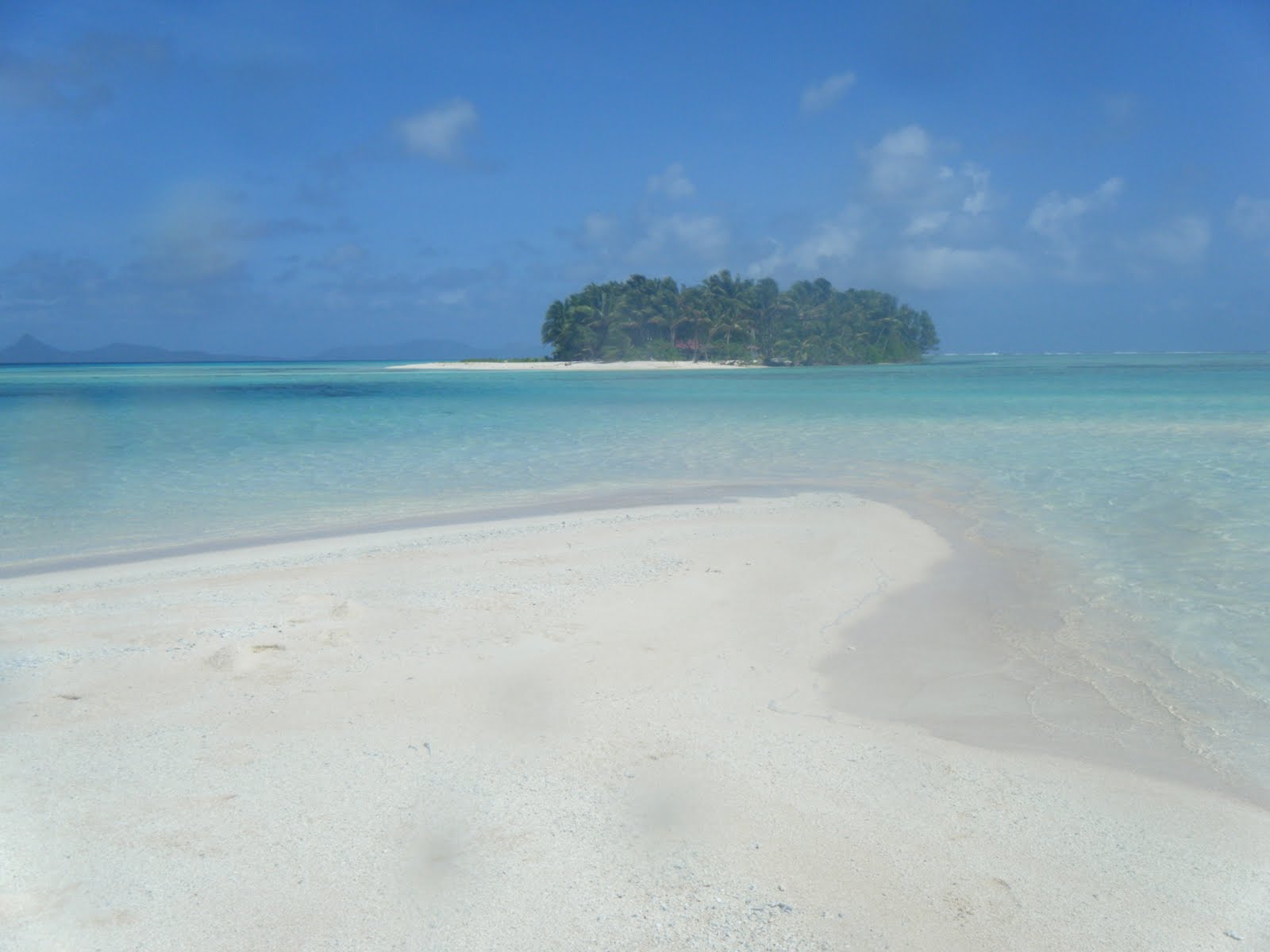
This past weekend the faculty and staff went to Pisar for our retreat. Some of it was meant to be spent in silence, but one of the Australians and I mostly went off on our own: we waded out to other, smaller islands and walked along the reef to watch the waves break on walls of rock and coral. I did some snorkeling, ate a bunch of coconuts, and lounged around in the hammocks. The last time I went to that island, I was two months into school and now I’m basically two months out. I’m hoping to make it back there once more before I leave, maybe with only a few people so it can be a more intimate experience. I would hate to not be able to see it again. I think it’s really what most people would envision when told about paradise tropical islands or secluded, untouched land.

Speaking of which, there’s so much I want to do before I leave! I guess that’s simply just more incentive to come back and visit sooner rather than later.

Monday, February 22, 2010


This past weekend I went back to Tonoas for the Sophomore Community Service Project. Every class is responsible for fulfilling these hours during the year, and sophomores and juniors usually go off-island to a more remote location. We left Friday around lunch and when we arrived around 3, the island was just as quiet as I remembered from last time – even with 40 high school students in tow. They hung out in the parish hall and played some games and read the letters that other students wrote to them. I took a walk with some other volunteers and found some cool WWII relics – all with some kind of story. We were all assigned host families, and I stayed at mine with two Xavier students who could thankfully both speak Chuukese since my family spoke no English at all. The house was a 15-20 minute walk from the parish, and modest to say the least. Unlike most of the other families, mine had no generator, so there was never power, no bathroom, and no furniture. The house itself was one concrete room with tile floors – dirty, dusty, and dark even in daylight. It was stuffy and morbidly hot. We had no beds of course, and no mats, so we slept on the tiles. The pillow I was given was insect-infested so I opted out of using that as well. We ate every meal on the floor as well – mostly rice, breadfruit, canned meat, and sometimes fish. The “bathroom,” a tin outhouse on the edge of the ocean, was a half mile or so down the road and the “shower,” a single well and bucket shielded from outside eyes by a shoddy wall of sheet metal, was another half mile in the other direction. If you had to use the bathroom late at night or at any other inconvenient time, you had to walk as far away from the other family members as possible and use the mangrove patches by the sea.
Despite the humble living arrangements of my family, my Xavier host sisters kept insisting that we were spoiled there. It was hard to imagine – to be “spoiled” in the States definitely would never mean sleeping on a dirt floor or never having a proper shower. As the weekend progressed however, I realized that being spoiled isn’t necessarily contingent on possessions; it can also point to how you are treated and cared for. My family didn’t have much, but they made sure to give me the best of everything they did have. We ate often, and with every meal they made sure I had an exorbitant amount of food – amounts not even the most excessive American could consume. They would never eat or sleep until I had already eaten or fallen asleep. With the exception of out last meal together, they sat and watched, fanning away the flies and arguing with me that I was not full, even when I insisted. While they did not eat, and my Xavier students only had a plate or so each, I had about 7 or 8 each meal. Everything that was brought out to us was to be “given to Sensei (teacher).” I was respected for being a guest, for being a teacher, and for being white. My tiny host sister followed me everywhere and sat with me, fanning me with palm leaves to keep me cool. On my last day, she would not leave my side and was visibly upset when I finally had to let go of her hand. Instead of having us do chores on Saturday morning, they took us around the island and fed us three times before lunch. After our work at the parish for the CSP, they took us swimming and gave us even more to eat. On my final night, they made me several mar’mars to wear, and on Sunday before I left they made a muu’muu to wear and gave me a huge handicraft made by someone in the family. After mass I noticed about 6 or 7 boxes at the parish hall with my name on it – coconuts, rice, breadfruit, limes, and fish. All my host father asked for in return was one of the pictures I took of all of us together. They asked me to go back and visit, and I want to, but every time I look at my calendar another month has gone by and completely slipped through my ability to fully appreciate it.
The CSP itself went well – the students cleared a hillside which will be used to grow tapioca for the community, and did some other cleaning around the parish. It was a little difficult to get them in the spirit at some points, but overall I think they realized the importance of what they were doing. The students at Xavier have so much more access to everything than people on islands like Tonoas. The need to give back is just as strong as the needs which they are fulfilling. On Saturday night, the students put on an entertainment show for their host families and the community, which I think was much appreciated. I love to see them working together to give spirit and life to others.
One really glaring thing I realized this weekend was that for me, poverty is such a Western creation, and one which we impose on others. I think a lot of people here might disagree with that, partly because poverty often seems so universal and a simple fact of living, and partly because no one who goes somewhere to do service likes to consider that they might be fueling a harmful system at the same time. This is something we can either deny, or choose to contend with and reflect upon. By Western standards, my host family on Tonoas was poor. They certainly didn’t possess the kind of standard of living as the vast majority of Americans, but they also didn’t even have as much as many of the other families on Tonoas. But things like generators, handbags, cell phones, canned food – these are all status symbols introduced by the West. The West introduced economy, it introduced industry, and now there is a notion of “having” and “not having.” Before, as students often tell me, everyone lived from the land using and possessing only what they needed. The community was the landowner, and everything was shared without much sense of material worth. Of course, there were always social ranks – clans and chiefs and things like that, but this was status based on name and blood, not on ipods and hot showers. Being “poor” was never the issue, but now people feel the sting of what it means to not have a good enough job, to not be able to buy the often useless things imported from “the mainland.” It’s a tough balance to strike because I think plenty of people would argue that Westernization only helps these people – better medicine, better food, better quality of life in general, but I tend to disagree with that. There are positive aspects, but for me, these are generally overshadowed by what we don’t do – or what we do wrongly. There is medicine, but hardly anyone but the ultra wealthy can afford decent care. The food we send is canned, processed, and carbonated causing more health problems like the raging diabetes people in the FSM war against. We address problems like the exportation of marijuana, but ignore issues like domestic violence and rape. We send pirated movies, designer sneakers, and knock-off ipods instead of textbooks. We extradite released criminals from Guam and Christian converters rather than sending doctors or educators. Maybe the intention to do good is there, and maybe it’s not – but ignoring the confused state of the FSM as it liminally wallows between tradition and modernization only pours salt in the wounds of issues like rising violent crime, mental illness, and suicide. These things were much less prevalent before the intervention of a “better way of life.” My host family insisted they were poor, and by the standards they are now forced to face they are, but I would never want them to think that way. They were happier and 100 times more generous than the almost obscenely wealthy people I’ve encountered in the past. Not every problem can be traced back to Westernization – it’s a mistake to think so – but thrusting an unsuspecting “undeveloped” region into your way of life cannot possibly only be for the best, especially when they never asked for that in the first place.
Sometimes I feel like my cynicism gets the best of me! Right now, I’m sitting on the porch in the shade watching the deep blue of the ocean move itself along silently, drinking cold coconut water. I have these critical ideas of my surroundings – that’s what true social academia will do to you I think – but I’m happy in the present, tangible moments I spend here. Tonoas was hard, but it was wonderful. I want to help things, but I don’t want to change them, and often it seems like the two cannot be separated.

Tuesday, February 16, 2010


This weekend at Xavier was Cultural Day. The students spent the day performing traditional dances from their native islands and we watched and ate local foods. The dances were amazing. Among my favorites were the Pohnpeian warrior dance, the Palauan warrior dance, and all the Yapese dances which were so colorful and exciting. The students have an amazing ability to transform themselves from the kids we teach everyday to these incredibly powerful and fierce dancers. We also watched the Pohnpeians prepare a traditional feast out of a pig they killed the night before, and then pound sakao which is made by mashing the root of the plant, mixing it with water, and twisting it into a liquid using the hibiscus plant. It’s a really long and exhausting process, but the students didn’t falter. I was so impressed by their skill and endurance. I don’t think that I could have ever done that in high school, and I don’t really know many people that could have either. The students explained to us the meanings behind a lot of what they did, and the experience of passing down and receiving sacred and traditional knowledge from their families or clans. The demonstrations were fantastic, but it was also kind of sad to realize that a lot of these dances and traditions don’t really occur anymore on most of these islands. I felt like I was back in Guam visiting the Chamorran museum villages – really incredible to see, but sad in that these cultures are disappearing. Such change is inevitable, but most of the students are so immensely proud of what they can do and of what their culture means that it’s somewhat upsetting to know how quickly it’s fading.

There were some people from the Chuukese community who came to watch and the students performed everything outside on a small platform stage set up on the basketball court. After mass and the Pohnpeians’ feast demonstration, we watched about 4 hours of dancing and listened to the stories behind what we saw. At night after the girls left to go home, the Pohnpeian students pounded more sakao for the faculty to have. It was a really peaceful experience to sit in their hut in the dark and relative silence, sharing sakao and I wish that I had more opportunities to take part in things like that. Cultural Day only happens once every two years, so I counted myself very lucky to be able to see it.

Otherwise, it’s been quiet here. The weeks keep viciously moving forward, and I’m getting more and more anxious about leaving. I know this is all going to seem like a wickedly unreal dream in just a few short months.

Tuesday, February 2, 2010


This past weekend was a busy one! Saturday was the date for the Xavier entrance exam, so schools across Micronesia and on Hawaii administered the test. On Friday, Rey and I went to Tonoas, accompanied by three students who could help us with translations. Tonoas, like Weno, is a lagoon island in Chuuk. Despite its relative closeness to Weno (only Etten might be slightly closer) I found that it seems much more remote. The boat ride over was not what I expected - we were guided by a very small boy with very long fingernails who had a darkened, old kind of expression permanently set on his face. The water was more rough than expected, and the boat so small and shaky we would leap over the water over the waves and land violently back down. It was a really wet ride, but pretty exciting. We landed around 5 just as the sun was starting its slow setting routine. I was stunned at how quiet the island was, and how thick the jungle seemed to be from the dock. The small boy showed us up to St. Anthony’s Parish; a sparkling, largely uninhabited group of buildings. I found out from the groundskeeper that I would be staying with a separate host family instead of the Parish with Rey and the students. This made me a little nervous at first since my own host family at the Korean Research Center back on Weno is vastly different than the majority of host families, and even so I don’t stay there frequently. I was reassured by the students who insisted I was actually the lucky one. We took a walk together through the more heavily condensed jungle areas, discovering some funky old Japanese WWII machinery and then made our way to the Memorial School where the test would be given the next day. We saw an old Japanese bunker, and hospital – both made of concrete and thus impressive in what stature remained, but nonetheless creaky, dilapidated, and crumbled like strange relics. The hospital especially was a unique sight. You could get a sense of its significance, but most of the walls had fallen and so it was left open to the air and encroaching foliage. We spoke to an old man there, somewhat of a relic himself, who spoke little English and little Chuukese, and mostly Japanese. He said he had seen the war happen on his island, and the silence we heard now is sometimes welcomed and sometimes only ghostly.

We returned to the parish around 7 and ate dinner – barbecue chicken, fried reef fish, rice, bananas, coconuts, cucumber, and kon (pounded breadfruit). We were also able to listen in on the musical practice for Diocesan Day, and had some good conversation with the resident pastor, Fr. Julio. One of my sponsor sisters came and picked me up, and I made my way over to their house realizing she did not speak any English. Her mother, Terusa, did speak a good deal of English which put me at ease and she invited me to take a shower and watch movies with them. The entire family – mother, father, sisters, brother, uncle and aunt sat crowded around a tiny laptop screen watching an American movie that none of them could understand except for Terusa and myself. They kept asking me to explain, and I tried in my very basic Chuukese. The room I slept in, and my bed, belonged to my sister and was much bigger and cleaner than my room at Xavier. I slept deeply, trying to forgo the warning of my host mother to keep one eye open for ghosts.

The test itself was given the next morning. It was supposed to start at 8, but instead we began at 9:30 because as expected, several students wandered in late, and it took them a while to understand and complete the registration. The time period for the test was longer than most of their school days, and I felt bad watching the struggle and squirm to complete as much as they could. All the while, small children stood outside peering in the windows trying to make sense of what was going on, and pointing at me, either laughing quietly or staring in disbelief at the unfamiliar white person. Once in a while, one of them would wander in and sit on the floor silently gazing up at their older counterparts. It was amazing to see – in the States, I could only imagine such children being loud, restless distractions instead of quiet, curious onlookers. During the half hour break, I chased some of them around all the while listening to them jokingly call me the Chuukese word for “ghost.” A few of the younger ones wanted me to hold their hand or let them sit on my lap, but a lot of the older ones seemed both excited by my presence, and wary of it. I would chase them, but they would never let me catch them, instead running further into the jungle where they correctly assumed I would not follow.

After the test ended, we took our time walking back and ate lunch at the parish. The entirety of the meal, one of our students conversed with the cook who did most of the talking. I couldn’t understand her, but I was content to just listen to rhythm of her speech and the language. We returned to Weno around 2:30 and spent the next four hours on a bus picking people up and dropping them off, which was a decidedly less fun excursion.

Today marked the beginning of Catholic Schools Week. I woke up at 5:30 am in order to catch the 6:15 bus downtown to Saramen Chuuk Academy where the mass was held. I’m not the biggest morning person, but in the coolness of the early day, I’m pretty certain there’s not much more beautiful than a Micronesian morning. I was rushing though, and barely had a chance to enjoy the sunrise. I was able to sleep a little at Saram before the mass, which was nice, and afterwards all three Catholic schools (Xavier, Saram, and St. Cecilia’s Elementary) ate lunch in the Saram gym and then had a few hours of field-day type games. It was really nice seeing all the schools working together, and to see the older kids helping out the younger ones who really enjoyed being included. We ended at about 2:30 and rode the flatbed truck home, which had to stop in Penia for a downed line (which means we won’t have power for at least a few days) so Meg and I walked home from there. The weekend ends without power, but maybe that means I’ll get a goodnight’s sleep after a long few days.

Tuesday, January 12, 2010


This was my first weekend back at Xavier after being in Guam for the holidays. Classes went smoothly, especially considering I’m teaching one less. The students seemed happy I was back – a couple of the boys came with the bus to pick me up from the airport, gave me hugs, and told me how much they had missed me. It was a really nice welcome back. I was worried at first that I would have to settle back in and readjust after having all those amenities I’ve been missing out on and getting back into “Western” lifestyles, but it was just the opposite. Guam was fantastic, and incredibly beautiful, but it was also very developed and touristy. There was a lot of capitalization on Chamorran culture, which ironically is now pretty much nonexistent. I wanted to show my family some of the more traditional, cultural aspects of Micronesia so their vacation wouldn’t just be a purely Americanized experience. I think there was a lot of diversity even in the midst of Western usurpation, so it wasn’t completely lacking. I really do hope at some point visiting Chuuk can be on their list – it would be completely different and unforgettable. For me at least, I was so happy to be back, and never realized how comfortable I’ve become here.
This weekend was a nice reintroduction to Chuuk life – Ted-one, Sam, Sammy, and I walked the back way of the island through the jungle to get to Blue Lagoon resort for lunch. It was a beautiful, peaceful walk, and thankfully not as treacherous as I thought. It took about two hours and we saw some great views and met some cute kids who walked with us when we finally reached the villages. The rest of the weekend was pretty quiet; we’re all just getting back into teaching and awaiting the arrival of the new volunteers who will probably come in the next couple weeks.

Sadly, violence on Weno has been drastically increasing. This past weekend, Koi-Koi, a Sapukian who is famous for wandering around sniffing gasoline from a can, was pachinkoed (hit with a Filipino dart) and then stabbed with a machete by a high school freshman in Penia. He somehow survived and is in the hospital waiting to receive blood. If you think there is blood shortage in the states, Chuuk would be a drastic eye-opener. There are definitely not as many people willing to donate in the first place, but there is also no one available to take blood, and generally inadequate facilities in which to store it. Two times that Chuukese people up at Xavier for mass were asked to donate for Koi-Koi, no one arrived to take the blood. Koi-Koi’s simple procedure, as far as I know, still has yet to take place.
Similarly, last Friday, the girls witnessed another act of violence as they took the bus home from Xavier. Near the COM (College of Micronesia) campus, the girls watched from their windows as one man took a butcher knife and started hacking away at another. The girls called the police, but no one responded. Eventually, for safety reasons and because really nothing else could be done, the bus continued to drive away. We only found out about this via another volunteer who happened to be riding the bus downtown; the students mentioned nothing to us, either because they didn’t want us to be worried for their safety, or because, while frightening, such violence here is often not out of the ordinary. Most times, it is the result of turf wars (which might have been the case for Koi-Koi since he was a Sapukian walking in Penia), but sometimes it is also just random.

On a lighter note, this morning was honors assembly for 2nd quarter. I missed the first one because I was sick with some awful parasite and had to go downtown to the clinic (not an experience I ever want to relive). It was really nice to see the students so excited for one another, and the ones who got on honors so proud of themselves. One thing I really enjoy about Xavier is the student community. I think sometimes there are definitely issues and tensions, but for the most part, everyone is so connected and supportive of one another. I really appreciate that kind of environment; I don’t think many schools in the states enjoy such closeness among their students.