This past weekend was full of new experiences for me. On Saturday afternoon, which was rainy and chilly, I drove to my new favorite restaurant, Coco Marinas, which is a small, outdoor café and bar that I happily realized is in possession of an espresso machine. The milk they use for lattes and cappuccinos is still sadly the boxed stuff that tastes like baby formula and goes bad nearly instantly after opening it, but I am in absolutely no position to complain. I ordered something iced and caffeinated, and a tortilla and onion rings – the fattiest and most delicious meal I’ve had since arriving. I went alone and took with me some letters and postcards I’ve been in the process of writing, as well as the book I’ve been reading since before I left – What is the What. It’s a fantastic book, but really depressing, and while reading is meant to be a relaxing and reflective activity, reading about the horrors of the Sudanese civil war really takes it out of me. I’m determined to finish it and start my next book, Eat Pray Love, which, while not something I would necessarily think would be my taste, has been recommended to me by a lot of people so I figured I would give it a shot.
I sat at a table right by the water until it started to rain again at which time I moved beneath the thatched roof. Although my meal was partially fueled by texting which is sometimes not the most calming pastime for me, I found private and consoling space in the small cat that sat next to me for most of my stay. I haven’t so far found many, if any, animals here that are very friendly or trusting of people, which is natural considering most of them are abused and neglected. But I miss my cat from Chuuk, and even now have this overwhelming sense that I abandoned her, especially after hearing how she waited for me day after day by my door, but I never came. That kind of story breaks my heart because animals lack the ability to fully understand – all they know are the feelings they are left with. I miss her sitting with me, and sleeping in my bed, following me around, carrying her babies to my door so they would be safe. There is such a connection between humans and animals, but the people here just don’t perceive it that way and seeing how animals are so intensely mistreated here makes me angry and upset, enough to ignore and partially reject the valence of “cultural relevance” to which I always feel so pressured and expected to subscribe. The cats that live at the Jesuit House are unfriendly and skittish. I feed them my leftovers, and they sometimes leave me dead animals they’ve caught, but they refuse to let me touch them and hiss, run, or swat at me if I try. That’s why it was such a nice feeling to have this cat by me at the restaurant. At first, she only came for the chicken, and if I am truly honest with myself, I’m sure that’s why she stayed. Initially though, I was not allowed to touch her. She ran off or slunk away, adeptly dodging my hand. After a while of eating the pieces of chicken I threw to her and sleeping at my feet, she finally let me pet her, which I did while I read. She would vacillate between feeling cuddly and rubbing up against me, to feeling moody and clawing or biting gently at my fingers, but she had a nice rest by me, and I found a surprising amount of solace having her nearby. She looked a lot like my Chuukese cat Oreo and it reminded me of the countless afternoons sans electricity that I sat on the porch with her in my lap watching the water. Or the countless times I felt sad, overwhelmed, or homesick and cried while holding her, eventually falling asleep with her next to me, my loneliness temporarily assuaged. I think she is somewhere else now, away from Xavier, living with nuns who I hear take good care of her and love her presence in their house. I hope to somehow find her when I visit in November and say hello and goodbye one last time before I leave for good.
The day cleared up, and around dusk, Greg and I left for Madolenihmw, the municipality of Pohnpei where Nan Madol is also located. After about 30 minutes, we followed a very steep path up into the hills to a big house owned by a family with whom Greg is fairly close. There was a sakao party because one of the daughters had just returned from the States. The word “party” indicates to me loud music and, being a New Yorker, even louder people; with food, alcohol, mixing and mingling. This was not the case. A relatively small group of people (10 or so) were seated outside in the nahs (I think traditionally a hut, but this one was a concrete structure, something like a really big and furnished carport). No one was eating except for a deacon who was present; most people were chewing betelnut. As soon as I stepped out of the car, all eyes expectedly turned to me as I don’t think many of them were anticipating hosting a white girl they had never seen before. No one spoke, and except for the immediate family, I was not formally introduced to anyone. For a while they just sat and watched me, and while Greg assured me that no one really talks at such things, the conversation that gradually emerged led me to believe that they had just been occupied with observing me, unsure of who I was or why I had come. Just like in Chuuk, it’s a strange feeling to be exotic and different, yet at the same time part of a minority that wields a surprising amount of power. It’s strange to be stared at, scrutinized and studied. It’s unsettling and flattering at the same time, and I don’t think I will ever get used to it. Greg and I were given chairs and a table with sakao “chasers” - local chicken soup, salad, taro with coconut, breaded fish, water, and one drinking coconut. It’s fascinating for me to watch sakao being pounded – the men sit around a big, flat stone table and pound the roots with a smaller stone, mixing them with water, and then wrapping them in the hibiscus leaf, which is squeezed and wrung out into a halved coconut shell. The sound of the small rock pounding on the big, flat stone is hollow, like the echo you would hear hitting an empty metal pipe. Combined with the sakao itself, and the mechanical, nonstop motions of the men making it, the effect is hypnotizing. Sakao is more of a slight muscle relaxer than anything else, and after a few rounds I just found myself happily joining the circle of people in their silent sedation, watching and listening. Conversations flourished every so often, but no one was speaking English even though some could, so I wasn’t really able to participate in the discussions. At first, I felt a slight twinge of exclusion, but after a while, I realized that I was enjoying being a passive observer, and that even without knowledge of what was being said, I was absorbing the fluid sounds of the language. It was a very comfortable night, and even though we were there for 2 hours doing nothing but passing a small coconut shell around and around, the time seemed to fly.
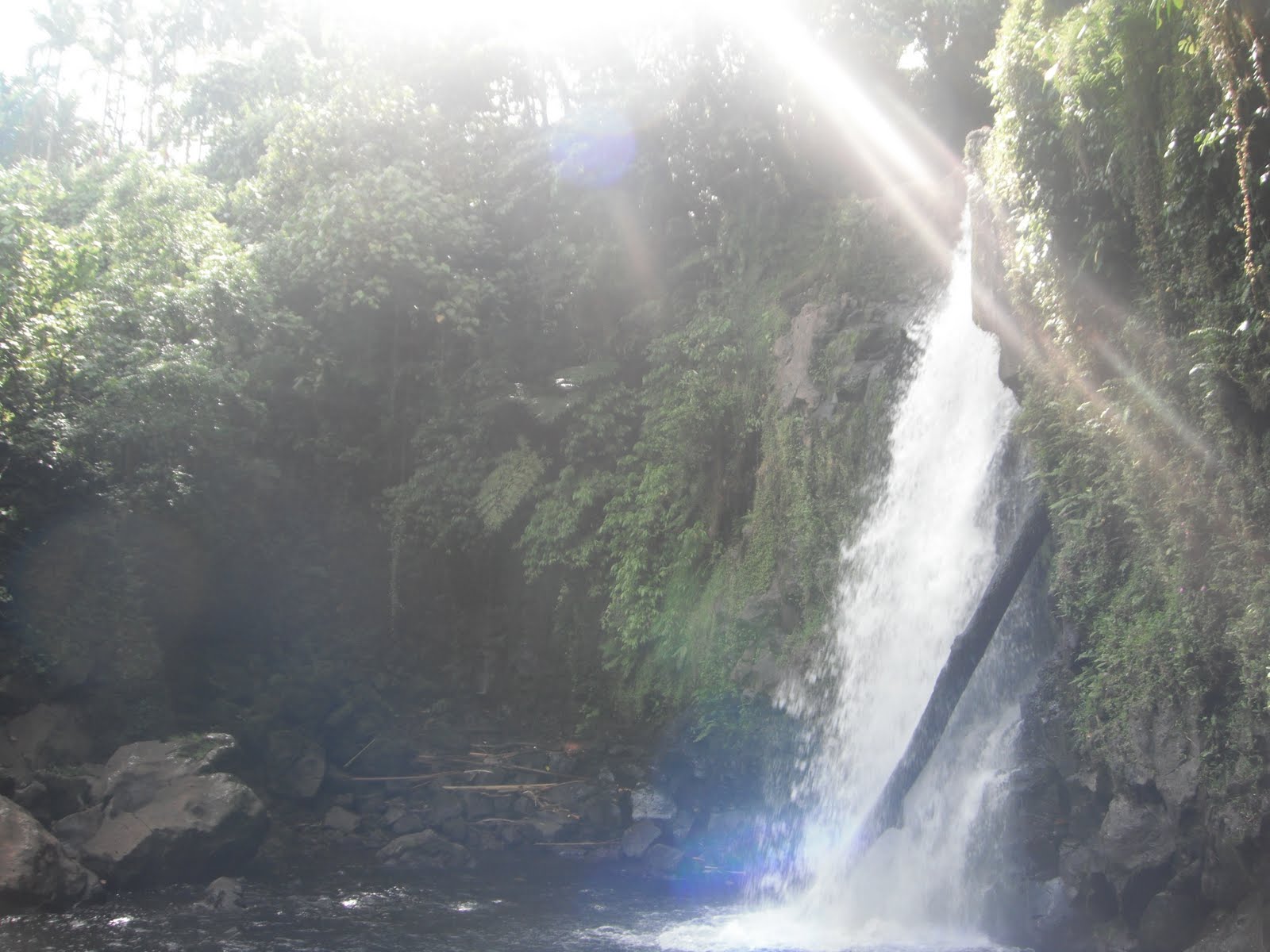
On Sunday, I joined the mehn wai group for a hike around Kitti, another Pohnpeian municipality. “Mehn wai” is literally “white man” (as you can probably discern from the way it sounds), but can also, not surprisingly, be translated to mean “sneaky people.” This particular group is not officially called the mehn wai club, and certainly you don’t have to be white to tag along, but it is largely made up of Westerners who like to do Western things such as hike, snorkel, kayak, play frisbee, and socially drink – things that many Pohnpeians don’t understand (like running simply for the exercise) or have little interest in. I am making a habit of going to the yoga class every Sunday evening, which helps relieve the tension of the week and find the energy to begin a new one. Yesterday was the first hike I’ve joined, and it was a lot of fun. We were walking to Lehn Paipohn, a waterfall situated a bit inland. It took about a half hour – 45 minutes to get to, and I soon realized that sneakers would have been a much better choice than flip flops since once we reached the jungle, the trail became pretty muddy. The waterfall was beautiful, and the pool beneath it was much bigger than that of Liduduhniap. Possibly because being home led me down the dangerous path of pure atrophy, and because sakao the night before sapped most of my energy, the short hike exhausted me completely. I was dirty and tired by dinner time, and it felt really refreshing.
I’m hoping this week goes quickly… I’m liking Pohnpei more and more, but I think the onset of November will really recharge my batteries because it will bring me that much closer to my visit to Chuuk. Of course, I also feel like I might be wishing away time I will really want back come winter in NY.
Sunday, October 3, 2010

Sunday, September 19, 2010
Radicals, and the Spirits that Follow Them
Seems like it’s time for my brief, biweekly update :)
These past two weeks have been semi productive in terms of work, but I’m still wishing that things would move faster. Our project has technically begun, even in the absence of crucial funding. Euke and I have been trying to set up meetings and interviews with various women and women’s groups around the island, but it’s proven to be extremely difficult. I think everyone knows that domestic violence is a major issue on the island, but no one wants to talk about it and even activist women’s groups are hesitant to begin a dialogue.
It’s difficult to pinpoint why domestic violence is such a prevalent problem here. Theories include that because there are no laws against it, there is no communal mindset that explicitly frames it as wrong. Yet I refuse to believe that so many men elsewhere would beat their partners just because there was an absence of legislation regarding abuse. People also blame alcohol, which is a major social issue here as well, but again there has to be something deeper affecting the emotional and mental core of abusers. Sociologically, it seems as though people here feel like they are in a confused limbo, somewhere between struggling to remain traditional and struggling to adequately enter the modern global community, but don’t know how to identify and manage such feelings. As such, men are still theoretically expected to be the protectors of the family, but their role is upset by more women joining the workforce. The extended family, which used to be the main source of support and community, has broken down as more and more people move around and engage in marriages that have not been arranged or sanctioned by the family. The demands are great on both partners to make sure the family succeeds, but the economy is poor, and without the traditional structures of the family, both men and women are puzzled as to what their roles are, and how to adequately fulfill them in an environment in which they are basically designed to fail. Often, men and women both work, and men who are socialized into believing that they need to be the ones supporting the family economically are often outshone by their more industrious, enterprising wives and feel jealous and emasculated. Men who do work often find conflict and misunderstandings in their workplace, and because they cannot take out their frustration on their colleagues or bosses, they take it out on their partners at home.
The communication between husband and wife is also very lacking. Euke mentioned to me that discussing things related to feelings and emotions is often taboo, and partners do not usually discuss the things that are bothering them; things they would like to see changed in the family or things that are frustrating them. As such, men may feel as though they have no safe outlet for their aggravation which leads them to violence.
Obviously, none of these explanations are excuses. There is a tendency to blame culture; as in because it is a dominating, patriarchal society where women have less rights men feel that their wives are property. Of course patriarchy was only introduced as a result of Westernization and Christianity (thanks again guys) as traditionally, many Micronesian societies were more matriarchal or at least primed towards a more egalitarian approach where men and women had very defined, yet equal roles. In fact, most of the women I’ve talked to thus far site the bible as reason why men should be in charge and women underneath them. It is a sentiment which Euke herself expresses, and one that makes me cringe and only fuels my distaste and my conviction that religion is actively detrimental to social progress. In my opinion, it’s impossible to achieve an end to something as insidious as domestic violence if you don’t believe in the inherent equality of the victim. Misogyny, for me, is loosely defined by making generalizations about women; lumping us all into one group full of bad assumptions and stereotypes. To define women by their inferiority to men is obviously sexist, regardless of whether or not its “religious” and until this insulting and harmful frame of mind is obliterated I don’t think there’s any hope for achieving a universally safe atmosphere for women.
The notion that such violence here is cultural is one that is both vague and naïve. To assert that domestic violence has always been a part of Micronesian culture is assuming one thing while denying another: assuming, and in a way excusing, violence against women as a product of a primitive and ignorant people, and denying the similar abuse that saturates Western culture as well. It has been shown that domestic violence here is getting worse and worse. Traditionally, extended families, the same ones that are currently unraveling, have been the glue of the entire community. They acted as the protection for women, and the support of individual, nuclear families. Marriages were often arranged, and were usually dependent on family ties and lineage. If there was an incident of abuse, women would take their children and run to their family’s house, or their brothers would come and take them away. This was a source of major disgrace and anxiety for the husband and his family, and if he wanted his wife back, he had to make a great display of apology and humility. The entire family would bring gifts and food and present them respectfully to the family of the wife. If the husband made a grand gesture of regret, and the wife conceded to go back, the wife’s family would demand a promise that it would not happen again or next time she wouldn’t return. In this way, such abuse was handled and kept in check in a way which today, it is not. Obviously, this traditional system was not perfect, and obviously it’s not meant to make light of the suffering of women in the past, but it also shows that abuse was taken seriously and was not something accepted or condoned. Unfortunately these traditional systems have been broken down, and there are no systems in place to curb domestic abuse. Although families are able to protect women less and less, domestic violence is still considered a family problem, and the women I’ve spoken with said that it’s a question of minding your business: it’s just a part of family life, and it should not be anyone else’s concern. Abuse is disgraceful and humiliating, and thus women are embarrassed to discuss it or to admit that they have been abused. Leaving your husband and your family is immensely shameful, and most women here would not even consider it because it would mean excommunication from their family, and even potentially from their church. Women are hesitant to call the police because they are afraid of losing dignity in their communities, and more afraid of retribution from their husbands. Since there are no laws against domestic violence, abusers are not jailed for any significant amount of time and afterwards are free to return home to their wives. All of these factors combined make it an almost impossible endeavor for women to escape this vicious cycle of abuse.
In the meetings I’ve had so far, it is apparent that women are afraid; many of them say they know word travels quickly here, and they don’t want any men to find out what they’ve been talking about. It often feels like some major conspiracy in which women are forced to keep silent. The whole point of this project is to begin a dialogue about violence, and allow women to tell their stories and begin to heal – but this seems the most difficult part. It is obvious to me that they want to get it out, but fear is holding them back. Some of the stories I have heard are absolutely terrifying, material straight out of a horror movie. I can’t post most of them, because they are meant to be confidential, but I can share one particularly gruesome story that became infamous in the public. A few years ago, a woman moved to the Mortlocks (outer islands of Chuuk) after marrying a Mortlockese man who ended up abusing her. Because this was not an arranged marriage, or one approved of by the families, the woman had no protection against this abuse. Finally one day, this man’s rage exploded and he sashimied his wife alive, carving deep cuts into her leg and cutting out the skin and muscle. He put salt and sand into the wounds, and although the woman was still alive when she was finally taken to a medical center, she eventually died from bleeding and infection. This is one of the worst stories I have heard so far, and although it is often told me with an air of tragedy or outrage, other stories of women whose husbands pull their hair or slap them in the face or give them black eyes or force them into sex are told with haunting nonchalance. If I express shock or disgust, women just shake their heads as if to say “this is just how it is,” though I know they don’t actually believe that. Women who are socialized to believe that they are less than their male counterparts are trapped in a prison of false identity. They are made to believe this ideology, but already I know from some of my discussions, some are yearning and struggling for a way out. If you are not inferior, how can you truly believe that you are? In any case, it will be a long road; one that won’t even be finished being paved by the time I leave in December.
One other interesting thing concerning work is the possession video we watched last week. Some of the staff here are working on a video about old religions and spirits, and one of them has a video that someone gave him of a spirit possession in Pohnpei. Possessions are apparently not uncommon here, and usually occur in young women. The notion of spirit possession existed before Christianity, and now I think with ideas like demons, the devil, and exorcisms, the concept has become a little conflated but still present. One woman here was upset because her female relative is currently possessed by at least 30 different spirits, and she wanted holy water to cleanse her, but her family wanted to hear what the spirits had to say. Usually, the spirits are those of dead relatives (most often male) that speak through their mediums, frequently about conflicts or troubles within the family and how to resolve them. The current theory is that females, especially young ones who feel they have no voice, subconsciously utilize this mechanism to release their frustrations and speak their minds through the spirit of a dead male authority figure who will be listened to by the family. Anyway this video was pretty chilling – a young girl was lying on the floor of her house, her female relatives holding her and stroking her hair and arms. She was completely inert and seemed almost in a trance. Eventually, she started shrieking and gurgling, screaming in a deep, gravelly voice. Her relatives were asking her in Pohnpeian who the spirit was and what it wanted. Apparently, according to Euke who was translating for us, the girl was not speaking any language that was familiar to her relatives – it was neither Pohnpeian nor Chuukese and sounded to her like a Kiribati language. Either way, the family could not understand this girl, who was screaming and fiercely writhing on the floor. The family at first tried pouring holy water on her, but it had no effect so they tried rubbing local medicine on her instead. The girl seemed to have phases of being very still and stiff and quiet on the floor but would then explode into a frenzy of yelling, shaking, and at some points unleashing a deep and sinister laugh. At times she seemed to welcome the touches of her family members, and at other times she violently rejected them, shaking until her dress loosened and fell down from her chest, clutching severely at her female relatives as they tried to cover her up again. The video ended with no resolution, and it was strange to imagine a young girl’s day spent this way. I don’t know that much about possessions here so I wonder how long it takes for them to get over it, if they ever do, and if some of them willingly “invite” the personalities of these spirits so that they can actually have a say in their family, or if it’s something that happens on a higher, less understood level. As anyone who has ever read my blog before can probably assume, I don’t actually believe in spirits or spirit possessions and in fact find the deeper social meanings behind them much more interesting than the banal notion that evil, devilish little creatures can actually inhabit and play puppet master to a human body.
My work right now is probably the most interesting thing I’ve been doing so far. I know that weekends are meant to be relaxing, but sometimes they just get too stagnant. 2 Fridays ago I went to a restaurant called Coco Marina with the JVIs. I had sadly already eaten dinner which was really too bad since the food there looked delicious. The restaurant is outside, under a thatched roof right by the water, and would be a nice place to go and have a drink and just read or write letters. This was plan for this past Saturday, and I was joined by Dickson, our young Yapese priest in training. We decided to walk which was a bad idea since I slipped, inexplicably just as I walked over a patch of water on some rocks. Obviously I fell flat on my back. Of course, the nail in the coffin was that I was wearing a skirt and a slip which ended up totally around my waist completely exposing my underwear. Immediately the notions of taboos and sacred spaces and shame and dishonor came rushing towards me all at once, and I felt mortified. I think back home I would have been embarrassed but could have laughed it off and let it go, but here the context and the reactions are so vastly different. Needless to say we didn’t make it to the restaurant and I spent the better part of my day in my room trying to sleep off the sore muscles. Yesterday was decidedly better – I went to the Village for brunch which has become a new tradition of mine. I love to go there and listen to people and stare at the gorgeous view. There is internet access, so I can focus my time on writing emails and skyping, and if no one happens to be online, write some letters or postcards. This weekend I had a coconut and crab oscar, which I had never heard of before really but is kind of like eggs benedict with crab and cheese and is absolutely delicious. Afterwards I suited up for yoga at the College of Micronesia campus which felt really good. It was nice to meet some new people and get some stretching in especially since my muscles felt so sore after falling. I’m hoping to get out a little more next weekend, but have just realized there is some religious party/ceremony thing happening right outside my house on Saturday night which I’m less than happy about. The more I live here, the more I’m convinced Saturday nights are not good for anything but tea, books, and sleep.
These past two weeks have been semi productive in terms of work, but I’m still wishing that things would move faster. Our project has technically begun, even in the absence of crucial funding. Euke and I have been trying to set up meetings and interviews with various women and women’s groups around the island, but it’s proven to be extremely difficult. I think everyone knows that domestic violence is a major issue on the island, but no one wants to talk about it and even activist women’s groups are hesitant to begin a dialogue.
It’s difficult to pinpoint why domestic violence is such a prevalent problem here. Theories include that because there are no laws against it, there is no communal mindset that explicitly frames it as wrong. Yet I refuse to believe that so many men elsewhere would beat their partners just because there was an absence of legislation regarding abuse. People also blame alcohol, which is a major social issue here as well, but again there has to be something deeper affecting the emotional and mental core of abusers. Sociologically, it seems as though people here feel like they are in a confused limbo, somewhere between struggling to remain traditional and struggling to adequately enter the modern global community, but don’t know how to identify and manage such feelings. As such, men are still theoretically expected to be the protectors of the family, but their role is upset by more women joining the workforce. The extended family, which used to be the main source of support and community, has broken down as more and more people move around and engage in marriages that have not been arranged or sanctioned by the family. The demands are great on both partners to make sure the family succeeds, but the economy is poor, and without the traditional structures of the family, both men and women are puzzled as to what their roles are, and how to adequately fulfill them in an environment in which they are basically designed to fail. Often, men and women both work, and men who are socialized into believing that they need to be the ones supporting the family economically are often outshone by their more industrious, enterprising wives and feel jealous and emasculated. Men who do work often find conflict and misunderstandings in their workplace, and because they cannot take out their frustration on their colleagues or bosses, they take it out on their partners at home.
The communication between husband and wife is also very lacking. Euke mentioned to me that discussing things related to feelings and emotions is often taboo, and partners do not usually discuss the things that are bothering them; things they would like to see changed in the family or things that are frustrating them. As such, men may feel as though they have no safe outlet for their aggravation which leads them to violence.
Obviously, none of these explanations are excuses. There is a tendency to blame culture; as in because it is a dominating, patriarchal society where women have less rights men feel that their wives are property. Of course patriarchy was only introduced as a result of Westernization and Christianity (thanks again guys) as traditionally, many Micronesian societies were more matriarchal or at least primed towards a more egalitarian approach where men and women had very defined, yet equal roles. In fact, most of the women I’ve talked to thus far site the bible as reason why men should be in charge and women underneath them. It is a sentiment which Euke herself expresses, and one that makes me cringe and only fuels my distaste and my conviction that religion is actively detrimental to social progress. In my opinion, it’s impossible to achieve an end to something as insidious as domestic violence if you don’t believe in the inherent equality of the victim. Misogyny, for me, is loosely defined by making generalizations about women; lumping us all into one group full of bad assumptions and stereotypes. To define women by their inferiority to men is obviously sexist, regardless of whether or not its “religious” and until this insulting and harmful frame of mind is obliterated I don’t think there’s any hope for achieving a universally safe atmosphere for women.
The notion that such violence here is cultural is one that is both vague and naïve. To assert that domestic violence has always been a part of Micronesian culture is assuming one thing while denying another: assuming, and in a way excusing, violence against women as a product of a primitive and ignorant people, and denying the similar abuse that saturates Western culture as well. It has been shown that domestic violence here is getting worse and worse. Traditionally, extended families, the same ones that are currently unraveling, have been the glue of the entire community. They acted as the protection for women, and the support of individual, nuclear families. Marriages were often arranged, and were usually dependent on family ties and lineage. If there was an incident of abuse, women would take their children and run to their family’s house, or their brothers would come and take them away. This was a source of major disgrace and anxiety for the husband and his family, and if he wanted his wife back, he had to make a great display of apology and humility. The entire family would bring gifts and food and present them respectfully to the family of the wife. If the husband made a grand gesture of regret, and the wife conceded to go back, the wife’s family would demand a promise that it would not happen again or next time she wouldn’t return. In this way, such abuse was handled and kept in check in a way which today, it is not. Obviously, this traditional system was not perfect, and obviously it’s not meant to make light of the suffering of women in the past, but it also shows that abuse was taken seriously and was not something accepted or condoned. Unfortunately these traditional systems have been broken down, and there are no systems in place to curb domestic abuse. Although families are able to protect women less and less, domestic violence is still considered a family problem, and the women I’ve spoken with said that it’s a question of minding your business: it’s just a part of family life, and it should not be anyone else’s concern. Abuse is disgraceful and humiliating, and thus women are embarrassed to discuss it or to admit that they have been abused. Leaving your husband and your family is immensely shameful, and most women here would not even consider it because it would mean excommunication from their family, and even potentially from their church. Women are hesitant to call the police because they are afraid of losing dignity in their communities, and more afraid of retribution from their husbands. Since there are no laws against domestic violence, abusers are not jailed for any significant amount of time and afterwards are free to return home to their wives. All of these factors combined make it an almost impossible endeavor for women to escape this vicious cycle of abuse.
In the meetings I’ve had so far, it is apparent that women are afraid; many of them say they know word travels quickly here, and they don’t want any men to find out what they’ve been talking about. It often feels like some major conspiracy in which women are forced to keep silent. The whole point of this project is to begin a dialogue about violence, and allow women to tell their stories and begin to heal – but this seems the most difficult part. It is obvious to me that they want to get it out, but fear is holding them back. Some of the stories I have heard are absolutely terrifying, material straight out of a horror movie. I can’t post most of them, because they are meant to be confidential, but I can share one particularly gruesome story that became infamous in the public. A few years ago, a woman moved to the Mortlocks (outer islands of Chuuk) after marrying a Mortlockese man who ended up abusing her. Because this was not an arranged marriage, or one approved of by the families, the woman had no protection against this abuse. Finally one day, this man’s rage exploded and he sashimied his wife alive, carving deep cuts into her leg and cutting out the skin and muscle. He put salt and sand into the wounds, and although the woman was still alive when she was finally taken to a medical center, she eventually died from bleeding and infection. This is one of the worst stories I have heard so far, and although it is often told me with an air of tragedy or outrage, other stories of women whose husbands pull their hair or slap them in the face or give them black eyes or force them into sex are told with haunting nonchalance. If I express shock or disgust, women just shake their heads as if to say “this is just how it is,” though I know they don’t actually believe that. Women who are socialized to believe that they are less than their male counterparts are trapped in a prison of false identity. They are made to believe this ideology, but already I know from some of my discussions, some are yearning and struggling for a way out. If you are not inferior, how can you truly believe that you are? In any case, it will be a long road; one that won’t even be finished being paved by the time I leave in December.
One other interesting thing concerning work is the possession video we watched last week. Some of the staff here are working on a video about old religions and spirits, and one of them has a video that someone gave him of a spirit possession in Pohnpei. Possessions are apparently not uncommon here, and usually occur in young women. The notion of spirit possession existed before Christianity, and now I think with ideas like demons, the devil, and exorcisms, the concept has become a little conflated but still present. One woman here was upset because her female relative is currently possessed by at least 30 different spirits, and she wanted holy water to cleanse her, but her family wanted to hear what the spirits had to say. Usually, the spirits are those of dead relatives (most often male) that speak through their mediums, frequently about conflicts or troubles within the family and how to resolve them. The current theory is that females, especially young ones who feel they have no voice, subconsciously utilize this mechanism to release their frustrations and speak their minds through the spirit of a dead male authority figure who will be listened to by the family. Anyway this video was pretty chilling – a young girl was lying on the floor of her house, her female relatives holding her and stroking her hair and arms. She was completely inert and seemed almost in a trance. Eventually, she started shrieking and gurgling, screaming in a deep, gravelly voice. Her relatives were asking her in Pohnpeian who the spirit was and what it wanted. Apparently, according to Euke who was translating for us, the girl was not speaking any language that was familiar to her relatives – it was neither Pohnpeian nor Chuukese and sounded to her like a Kiribati language. Either way, the family could not understand this girl, who was screaming and fiercely writhing on the floor. The family at first tried pouring holy water on her, but it had no effect so they tried rubbing local medicine on her instead. The girl seemed to have phases of being very still and stiff and quiet on the floor but would then explode into a frenzy of yelling, shaking, and at some points unleashing a deep and sinister laugh. At times she seemed to welcome the touches of her family members, and at other times she violently rejected them, shaking until her dress loosened and fell down from her chest, clutching severely at her female relatives as they tried to cover her up again. The video ended with no resolution, and it was strange to imagine a young girl’s day spent this way. I don’t know that much about possessions here so I wonder how long it takes for them to get over it, if they ever do, and if some of them willingly “invite” the personalities of these spirits so that they can actually have a say in their family, or if it’s something that happens on a higher, less understood level. As anyone who has ever read my blog before can probably assume, I don’t actually believe in spirits or spirit possessions and in fact find the deeper social meanings behind them much more interesting than the banal notion that evil, devilish little creatures can actually inhabit and play puppet master to a human body.
My work right now is probably the most interesting thing I’ve been doing so far. I know that weekends are meant to be relaxing, but sometimes they just get too stagnant. 2 Fridays ago I went to a restaurant called Coco Marina with the JVIs. I had sadly already eaten dinner which was really too bad since the food there looked delicious. The restaurant is outside, under a thatched roof right by the water, and would be a nice place to go and have a drink and just read or write letters. This was plan for this past Saturday, and I was joined by Dickson, our young Yapese priest in training. We decided to walk which was a bad idea since I slipped, inexplicably just as I walked over a patch of water on some rocks. Obviously I fell flat on my back. Of course, the nail in the coffin was that I was wearing a skirt and a slip which ended up totally around my waist completely exposing my underwear. Immediately the notions of taboos and sacred spaces and shame and dishonor came rushing towards me all at once, and I felt mortified. I think back home I would have been embarrassed but could have laughed it off and let it go, but here the context and the reactions are so vastly different. Needless to say we didn’t make it to the restaurant and I spent the better part of my day in my room trying to sleep off the sore muscles. Yesterday was decidedly better – I went to the Village for brunch which has become a new tradition of mine. I love to go there and listen to people and stare at the gorgeous view. There is internet access, so I can focus my time on writing emails and skyping, and if no one happens to be online, write some letters or postcards. This weekend I had a coconut and crab oscar, which I had never heard of before really but is kind of like eggs benedict with crab and cheese and is absolutely delicious. Afterwards I suited up for yoga at the College of Micronesia campus which felt really good. It was nice to meet some new people and get some stretching in especially since my muscles felt so sore after falling. I’m hoping to get out a little more next weekend, but have just realized there is some religious party/ceremony thing happening right outside my house on Saturday night which I’m less than happy about. The more I live here, the more I’m convinced Saturday nights are not good for anything but tea, books, and sleep.
Wednesday, September 15, 2010
Lydia's creepy creature interactions
This will be a short blog, and not really an update which I’ll try to do this weekend. Back home people asked me for bug stories, but the best I could really come up with were the ants constantly invading my food and the shoe-sized cockroaches scuttling around my shower when the power was out (and biting me in the neck when I slept on the floor). Now that I have some disturbing critter stories I thought I’d share while they’re still fresh in my mind:
1. This one is probably the least gross. There are about 4 or 5 cats that live on the residence grounds, though they all refuse to be touched and are super skittish around people. All of them are black and white, and all seem to follow directives from the biggest cat, who always has a scrunched, grumpy, grandpa face, leading me to believe they are all somehow related. Since I adore cats, and always want a pet so badly, I’ve been attempting in vain to win their love and approval. One habit I picked up at Xavier, especially when there was not a whole lot of food to go around, was never to waste leftovers. So rather than throw food in the trash (especially meat which I am finding harder and harder to eat), I toss it outside to the cats. Now whenever I walk by or open the door, they run over to me meowing, expecting some kind of treat… but still if I bend down to pet one, they run off into the bushes. And yet, I know they love me. In our “dining room” there’s a full length window from floor to ceiling and now when I am eating breakfast or dinner, all too frequently one of the cats comes to the window, paws on it, and leaves a headless rat by the door. This seems to happen too often to be coincidence, so I take it as a sign that the cats feel some affection for me, and they choose to express it through their morbid little presents. True love, really.
2. I first discovered these next critters in Chuuk, but soon realized they are here as well. They are called plaster bagworms, and while much less insidious and destructive than their fellow invasive insects, the termites (which I can clearly hear chomping away at my walls at nighttime and awake to find little puddles of sawdust all over my room), they are more gross and do a better job at hiding themselves which is more disturbing. They are a little hard to describe, but basically they are flat little grey or brown things… they look very much like a squished dust bunny and for most of last year, that’s what I thought they were until one day when I picked one up and saw to my revolted shock a little worm head popping out of its flat shelter. After finding multiple of these around my room, often in my bed, I finally decided to google them since no one seemed to know what they were. Apparently, these specific worms weave protective cocoons out of dust, hair, and pieces of fabric, hence the dust bunny appearance. If I remember correctly, they’re completely harmless… just kind of icky.
3. You would think that living in Pohnpei with American priests who are used to getting waited on and having the best of everything (despite this mythical vow of poverty I hear so much about) that there would be an overwhelming amount of food in the house, but I quickly realized that with the exception of dinner which is prepared for them by a local cook, the other residents sustain themselves mostly on canned soup, spam, ramen, bread, and peanut butter. I took myself to the “supermarket” to buy some more appetizing and nutritious foods since I usually have lunch at the house, and of course boxed macaroni and cheese was high on the list. I couldn’t find the Kraft blue box kind which I used to love in college, but there was a similar brand, and even better one that didn’t require milk and butter – two things we don’t have much of. When later that week, I poured the first box into boiling water I noticed little black things rising to the top. I thought it was just burnt crust from the pot, but as I scooped them out with a spoon, I noticed these little things had shells and legs and claws. Probably only the size of large carpenter ants, these bugs were unlike anything I’ve ever really seen. They looked like miniature aliens with curved backs and strange claw-like apparatuses on their many little legs. At first they kind of reminded me of giant-sized lice, but that thought was completely unappetizing so I tried finding another, more benign association, but failed. Since I already had boiled the pasta, and the thought of wasting food and money doesn’t generally appeal to someone on a volunteer’s salary, I decided to eat it anyway. I drained the water, and rinsed the pasta, thumbing through the noodles to pick out these bug carcasses wherever I could. I’m sure I still ate some, and the thought of this kind of repulsed me at the time, but the prospect of opening a fresh, uninfested box the next week was somehow reassuring. A few days ago I decided to eat the other box I bought. I opened it and before even boiling any water, sifted through the macaroni to see if the bugs had attacked that one as well, but couldn’t find any. Feeling victorious, I started to cook it… only to realize that once again the bodies of the boiled bugs floated to the top of the froth. I don’t know where these bugs were hiding. I figure they must actually cling inside the noodles or something like that. Anyway, I ate this pasta too and so far, still feel fine. No harm, no foul.
4. This last story probably ranks the worst, at least from my point of view. Pohnpei is home to several more kinds of spiders than Chuuk, at least from what I’ve observed. The famous wolf spiders are here too, but there are also tarantulas (after seeing a small one, I made sure to research this!) and several other kinds of very pointy, vicious looking things that hover menacingly from their expansive webs. Outside one particular window in the residence, there are probably 5 or 6 massive black spiders with neon backs. It makes me shudder to think they are so close to being inside the same house as I am, and I try to not think about them dangling from my ceiling while I sleep. They all live in one vast, connected web resting, it seems, innocuously. On the window to which they are adjacent, there are these furry things which look like some kind of burr. Since I came here I have been trying to figure out what these things are that look like small balls of dust stuck to the widow. Last night while standing in the kitchen I decided to have a closer look. It was then I realized that these things are not stuck to the window, but rather stuck in the web. After careful inspection I realized that they are not burrs or some other kind of mysterious plant life, but rather basically coffins – the woven traps of insects caught in the spiders’ web. I could see the outlines of some shriveled, empty bug corpses caught inside these death cocoons. And, even more to my horror, when I looked even closer I could see tiny, tiny white dots everywhere on the web: miniscule baby spiders – hundreds and thousands of them; newly hatched evil being unleashed on the world. I know spiders are good – the ones here are generally harmless even if they are capable of biting, and they keep worse bugs away. But they LOOK so terrifying, especially in such foreboding numbers. They are only fascinating outside my house: right outside my window is way too close.
All this talk of animals reminds me of a quote I love that I think says a lot about my experiences here:
You do not have to be good. You do not have to walk on your knees
for a hundred miles through the desert repenting.
You only have to let the soft animal of your body
love what it loves.
-Mary Oliver
I like to think even though I find certain creatures much less appealing than others, that we can somehow work together: I'll keep feeding the cats if they keep rats out of my kitchen. I will leave the spiders alone if they eat mosquitos that might perhaps be carrying something unpleasant like Dengue fever. Or, at the very least, maybe we can just learn to silently and benignly coexist, doing what makes us happy, not causing harm to each other, and not feeling guilt or regret for just being who we are.
Anyway, this was just something brief to keep everyone in the know! :) hopefully I can update with something more cheery this weekend!!!
1. This one is probably the least gross. There are about 4 or 5 cats that live on the residence grounds, though they all refuse to be touched and are super skittish around people. All of them are black and white, and all seem to follow directives from the biggest cat, who always has a scrunched, grumpy, grandpa face, leading me to believe they are all somehow related. Since I adore cats, and always want a pet so badly, I’ve been attempting in vain to win their love and approval. One habit I picked up at Xavier, especially when there was not a whole lot of food to go around, was never to waste leftovers. So rather than throw food in the trash (especially meat which I am finding harder and harder to eat), I toss it outside to the cats. Now whenever I walk by or open the door, they run over to me meowing, expecting some kind of treat… but still if I bend down to pet one, they run off into the bushes. And yet, I know they love me. In our “dining room” there’s a full length window from floor to ceiling and now when I am eating breakfast or dinner, all too frequently one of the cats comes to the window, paws on it, and leaves a headless rat by the door. This seems to happen too often to be coincidence, so I take it as a sign that the cats feel some affection for me, and they choose to express it through their morbid little presents. True love, really.
2. I first discovered these next critters in Chuuk, but soon realized they are here as well. They are called plaster bagworms, and while much less insidious and destructive than their fellow invasive insects, the termites (which I can clearly hear chomping away at my walls at nighttime and awake to find little puddles of sawdust all over my room), they are more gross and do a better job at hiding themselves which is more disturbing. They are a little hard to describe, but basically they are flat little grey or brown things… they look very much like a squished dust bunny and for most of last year, that’s what I thought they were until one day when I picked one up and saw to my revolted shock a little worm head popping out of its flat shelter. After finding multiple of these around my room, often in my bed, I finally decided to google them since no one seemed to know what they were. Apparently, these specific worms weave protective cocoons out of dust, hair, and pieces of fabric, hence the dust bunny appearance. If I remember correctly, they’re completely harmless… just kind of icky.
3. You would think that living in Pohnpei with American priests who are used to getting waited on and having the best of everything (despite this mythical vow of poverty I hear so much about) that there would be an overwhelming amount of food in the house, but I quickly realized that with the exception of dinner which is prepared for them by a local cook, the other residents sustain themselves mostly on canned soup, spam, ramen, bread, and peanut butter. I took myself to the “supermarket” to buy some more appetizing and nutritious foods since I usually have lunch at the house, and of course boxed macaroni and cheese was high on the list. I couldn’t find the Kraft blue box kind which I used to love in college, but there was a similar brand, and even better one that didn’t require milk and butter – two things we don’t have much of. When later that week, I poured the first box into boiling water I noticed little black things rising to the top. I thought it was just burnt crust from the pot, but as I scooped them out with a spoon, I noticed these little things had shells and legs and claws. Probably only the size of large carpenter ants, these bugs were unlike anything I’ve ever really seen. They looked like miniature aliens with curved backs and strange claw-like apparatuses on their many little legs. At first they kind of reminded me of giant-sized lice, but that thought was completely unappetizing so I tried finding another, more benign association, but failed. Since I already had boiled the pasta, and the thought of wasting food and money doesn’t generally appeal to someone on a volunteer’s salary, I decided to eat it anyway. I drained the water, and rinsed the pasta, thumbing through the noodles to pick out these bug carcasses wherever I could. I’m sure I still ate some, and the thought of this kind of repulsed me at the time, but the prospect of opening a fresh, uninfested box the next week was somehow reassuring. A few days ago I decided to eat the other box I bought. I opened it and before even boiling any water, sifted through the macaroni to see if the bugs had attacked that one as well, but couldn’t find any. Feeling victorious, I started to cook it… only to realize that once again the bodies of the boiled bugs floated to the top of the froth. I don’t know where these bugs were hiding. I figure they must actually cling inside the noodles or something like that. Anyway, I ate this pasta too and so far, still feel fine. No harm, no foul.
4. This last story probably ranks the worst, at least from my point of view. Pohnpei is home to several more kinds of spiders than Chuuk, at least from what I’ve observed. The famous wolf spiders are here too, but there are also tarantulas (after seeing a small one, I made sure to research this!) and several other kinds of very pointy, vicious looking things that hover menacingly from their expansive webs. Outside one particular window in the residence, there are probably 5 or 6 massive black spiders with neon backs. It makes me shudder to think they are so close to being inside the same house as I am, and I try to not think about them dangling from my ceiling while I sleep. They all live in one vast, connected web resting, it seems, innocuously. On the window to which they are adjacent, there are these furry things which look like some kind of burr. Since I came here I have been trying to figure out what these things are that look like small balls of dust stuck to the widow. Last night while standing in the kitchen I decided to have a closer look. It was then I realized that these things are not stuck to the window, but rather stuck in the web. After careful inspection I realized that they are not burrs or some other kind of mysterious plant life, but rather basically coffins – the woven traps of insects caught in the spiders’ web. I could see the outlines of some shriveled, empty bug corpses caught inside these death cocoons. And, even more to my horror, when I looked even closer I could see tiny, tiny white dots everywhere on the web: miniscule baby spiders – hundreds and thousands of them; newly hatched evil being unleashed on the world. I know spiders are good – the ones here are generally harmless even if they are capable of biting, and they keep worse bugs away. But they LOOK so terrifying, especially in such foreboding numbers. They are only fascinating outside my house: right outside my window is way too close.
All this talk of animals reminds me of a quote I love that I think says a lot about my experiences here:
You do not have to be good. You do not have to walk on your knees
for a hundred miles through the desert repenting.
You only have to let the soft animal of your body
love what it loves.
-Mary Oliver
I like to think even though I find certain creatures much less appealing than others, that we can somehow work together: I'll keep feeding the cats if they keep rats out of my kitchen. I will leave the spiders alone if they eat mosquitos that might perhaps be carrying something unpleasant like Dengue fever. Or, at the very least, maybe we can just learn to silently and benignly coexist, doing what makes us happy, not causing harm to each other, and not feeling guilt or regret for just being who we are.
Anyway, this was just something brief to keep everyone in the know! :) hopefully I can update with something more cheery this weekend!!!
Monday, September 6, 2010
UnEvents (disclaimer: religious rant to follow)
Well, my second weekend in Pohnpei just passed, and was unfortunately a lot less eventful than the last one. Work on Friday was quiet as usual. I came back from lunch to find Eugenia (Euke), a Chuukese woman who also works at MicSem , confronted with an insurmountable amount of take-out food that her son had brought for her. She convinced me to sit and eat with her, even though I was already full. We ate potato salad, taro, greens, sashimi, and local chicken soup and talked, mostly about Chuuk and how different it is from Pohnpei. Fr. Fran came in after a while, and sat down with us and we talked some more about social issues throughout FSM – homosexuality, mental illness, education – and went on for a few hours. After this, most of the staff gathered in the small media room to watch the newest MicSem video installment on education and local public schools in the FSM.
After work, Greg and I went out to dinner at the Joy Hotel and saw Inception at the Pohnpei cinemas. I was surprised how much the movies reminded me of home. The theater was MUCH smaller, but it was nice inside; cool and clean and quiet. I expected to walk outside and be at home, in the parking lot of the Galleria, and drive to my house. Everything here is like a stranger, smaller version of what it is back home – the shops, the streets, the grocery stores. The environment is much different of course, but so many things remind me of being back in NY, much more than they did in Chuuk. It gives the impression of struggling to maintain a semblance of the West with diner-style cafes and take-out places where you can get an American hamburger rather than a plastic case of rice and barbecued chicken. But if you drive around Kolonia for just a while, you realize the road goes nowhere and you are just traveling in big circles, seeing the same things, as though you are on the set of an old cartoon watching the same sights passing you by.
On Saturday, I discovered the Jesuits' Hitchcock collection, and watching Psycho, which has always been one of my favorite movies. I was restless after awhile, and practically alone in the house, so I decided to drive around and explore as much as I could. I went down Kaselehlie Street, the main coastal street in Kolonia, and kept driving. I passed lots of shops and little restaurants (Sei, Angie’s) that I had only heard about. I passed the Oceanview Hotel and shopping center, which looked absolutely deserted, and the famous Flamingo bar and dance club, which I’ve been warned not to go in. Delightedly, I realized the food stores here have a much nicer variety, so I bought myself some crackers, chips, chocolate, flavored seltzer, and kahlua (all the necessities to survive, obviously). I bought some coconuts from Three Star, a shady, dark little store right next to the road leading to the waterfalls I visited with Tom. I did the same sorts of things on Sunday – driving around where I could, going into stores that were open, and desperately seeking some exercise.
One thing about living here that is so vastly different from Chuuk is the sense of being on my own. At Xavier, this was never an issue… sometimes to the point of sheer annoyance. There were always other faculty members around, most around my age, to eat with, sit on the porch and chat with, play cards with, and just pass the empty time somewhat decently. Besides which, students were everywhere, always. Here, I feel an overwhelming sense of silence and sometimes loneliness. I don’t relate all too well with the older priests I am living with (surprise surprise). I might go off on my own to more uncharted, exciting regions except they wouldn’t be the safest ventures.
Today was Euke’s birthday at MicSem, so we had a small party for her. We sang, took pictures, and had some cake (which was purple and WAY too sweet). Dickson showed me his uncle’s website with pictures of Woleai and his relatives. So much different than Pohnpei of course! Very natural and peaceful looking. They remided me of Sammy, another Xavier teacher, who left to teach in Yap on that island. I can't imagine not being able to have contact with anyone except your neighbors. One step at a time for me =) Tonight was also the first night since I’ve been here that power went out – from about 6 until 9. We had candles, but other than that it was absolutely pitch black. I was surprised after being in Chuuk how frustrated I was. Though even in Chuuk it was the one thing I could never really get over. It annoys me because it’s a problem that can be fixed if it was only paid attention to. But generally, power is remarkable here compared to Chuuk which is just a sad testament to the government inefficiency there.
A few nights ago, I downloaded the movie Religulous, which I’ve seen before but is one of those biting documentaries that I really love. Along with Richard Dawkins clips, I have to watch such things to keep me sane here. It’s unlike anything I’ve ever experienced; this environment in which such a harmful product infiltrates every aspect of these people’s lives. I really believe that, more than I ever have. It’s not just a perfunctory, transient lashing out at religion because it’s boring, repetitive, or clearly the instigator in so much modern violence. It’s a recognition of the ways in which religion, particularly Christianity, came about and how unoriginal, uninspired, and unevidenced they are. This past week, a friend of mine from high school passed away. Another friend of mine also tragically lost someone close to her. I feel like at these times, it’s easiest and almost necessary to seek out comfort from some unknown source; to believe that there somehow has to be justice for the unfairness and suffering in the world. When I hear stories like this, I want to believe in god because like an agent or overpaid lawyer, I need to think that he’s working for a plan that will end up benefiting me. But this is such a convenient and ultimately selfish thought. Not that I think such suffering is necessarily meaningless, but it’s too easy to find solace in a figure like god. The reality is that the world just operates unfairly. And to be honest, I’ve come to the conclusion that I’d rather think that than have faith in a god which, by his own standing, is jealous, malevolent, angry, and vengeful. What an awful depiction of someone who is meant to be running our lives, or at the very least protecting them. God sounds more childlike than many children I know, and I think better versions of morality can be found on some seedy sitcoms. I think this is depressing to some people (which is a big motivator for religion in the first place) because people need to feel loved, watched over, and most importantly, like they matter. It’s very soothing to the human ego. But what is so wrong about not mattering, at least in a universal sense? The stories surrounding Jesus have been regurgitated from old Hindu, Sumerian, Hebrew, and Egyptian religions before him. I’d much rather believe in the reality of Jesus, the living wonders of our world, the grandest systems and schemes of the universe as working together for their own ends and prosperity rather than for that of some invisible being pulling all the strings. That to me is much more wondrous.
I like this quote by Lawrence Krauss:
Every atom in your body came from a star that exploded. And, the atoms in your left hand probably came from a different star than your right hand. It really is the most poetic thing I know about physics: You are all stardust. You couldn’t be here if stars hadn’t exploded, because the elements - the carbon, nitrogen, oxygen, iron, all the things that matter for evolution and for life - weren’t created at the beginning of time. They were created in the nuclear furnaces of stars, and the only way for them to get into your body is if those stars were kind enough to explode. So, forget Jesus. The stars died so that you could be here today.
I mean, isn’t that just so much more fantastic?
After work, Greg and I went out to dinner at the Joy Hotel and saw Inception at the Pohnpei cinemas. I was surprised how much the movies reminded me of home. The theater was MUCH smaller, but it was nice inside; cool and clean and quiet. I expected to walk outside and be at home, in the parking lot of the Galleria, and drive to my house. Everything here is like a stranger, smaller version of what it is back home – the shops, the streets, the grocery stores. The environment is much different of course, but so many things remind me of being back in NY, much more than they did in Chuuk. It gives the impression of struggling to maintain a semblance of the West with diner-style cafes and take-out places where you can get an American hamburger rather than a plastic case of rice and barbecued chicken. But if you drive around Kolonia for just a while, you realize the road goes nowhere and you are just traveling in big circles, seeing the same things, as though you are on the set of an old cartoon watching the same sights passing you by.
On Saturday, I discovered the Jesuits' Hitchcock collection, and watching Psycho, which has always been one of my favorite movies. I was restless after awhile, and practically alone in the house, so I decided to drive around and explore as much as I could. I went down Kaselehlie Street, the main coastal street in Kolonia, and kept driving. I passed lots of shops and little restaurants (Sei, Angie’s) that I had only heard about. I passed the Oceanview Hotel and shopping center, which looked absolutely deserted, and the famous Flamingo bar and dance club, which I’ve been warned not to go in. Delightedly, I realized the food stores here have a much nicer variety, so I bought myself some crackers, chips, chocolate, flavored seltzer, and kahlua (all the necessities to survive, obviously). I bought some coconuts from Three Star, a shady, dark little store right next to the road leading to the waterfalls I visited with Tom. I did the same sorts of things on Sunday – driving around where I could, going into stores that were open, and desperately seeking some exercise.
One thing about living here that is so vastly different from Chuuk is the sense of being on my own. At Xavier, this was never an issue… sometimes to the point of sheer annoyance. There were always other faculty members around, most around my age, to eat with, sit on the porch and chat with, play cards with, and just pass the empty time somewhat decently. Besides which, students were everywhere, always. Here, I feel an overwhelming sense of silence and sometimes loneliness. I don’t relate all too well with the older priests I am living with (surprise surprise). I might go off on my own to more uncharted, exciting regions except they wouldn’t be the safest ventures.
Today was Euke’s birthday at MicSem, so we had a small party for her. We sang, took pictures, and had some cake (which was purple and WAY too sweet). Dickson showed me his uncle’s website with pictures of Woleai and his relatives. So much different than Pohnpei of course! Very natural and peaceful looking. They remided me of Sammy, another Xavier teacher, who left to teach in Yap on that island. I can't imagine not being able to have contact with anyone except your neighbors. One step at a time for me =) Tonight was also the first night since I’ve been here that power went out – from about 6 until 9. We had candles, but other than that it was absolutely pitch black. I was surprised after being in Chuuk how frustrated I was. Though even in Chuuk it was the one thing I could never really get over. It annoys me because it’s a problem that can be fixed if it was only paid attention to. But generally, power is remarkable here compared to Chuuk which is just a sad testament to the government inefficiency there.
A few nights ago, I downloaded the movie Religulous, which I’ve seen before but is one of those biting documentaries that I really love. Along with Richard Dawkins clips, I have to watch such things to keep me sane here. It’s unlike anything I’ve ever experienced; this environment in which such a harmful product infiltrates every aspect of these people’s lives. I really believe that, more than I ever have. It’s not just a perfunctory, transient lashing out at religion because it’s boring, repetitive, or clearly the instigator in so much modern violence. It’s a recognition of the ways in which religion, particularly Christianity, came about and how unoriginal, uninspired, and unevidenced they are. This past week, a friend of mine from high school passed away. Another friend of mine also tragically lost someone close to her. I feel like at these times, it’s easiest and almost necessary to seek out comfort from some unknown source; to believe that there somehow has to be justice for the unfairness and suffering in the world. When I hear stories like this, I want to believe in god because like an agent or overpaid lawyer, I need to think that he’s working for a plan that will end up benefiting me. But this is such a convenient and ultimately selfish thought. Not that I think such suffering is necessarily meaningless, but it’s too easy to find solace in a figure like god. The reality is that the world just operates unfairly. And to be honest, I’ve come to the conclusion that I’d rather think that than have faith in a god which, by his own standing, is jealous, malevolent, angry, and vengeful. What an awful depiction of someone who is meant to be running our lives, or at the very least protecting them. God sounds more childlike than many children I know, and I think better versions of morality can be found on some seedy sitcoms. I think this is depressing to some people (which is a big motivator for religion in the first place) because people need to feel loved, watched over, and most importantly, like they matter. It’s very soothing to the human ego. But what is so wrong about not mattering, at least in a universal sense? The stories surrounding Jesus have been regurgitated from old Hindu, Sumerian, Hebrew, and Egyptian religions before him. I’d much rather believe in the reality of Jesus, the living wonders of our world, the grandest systems and schemes of the universe as working together for their own ends and prosperity rather than for that of some invisible being pulling all the strings. That to me is much more wondrous.
I like this quote by Lawrence Krauss:
Every atom in your body came from a star that exploded. And, the atoms in your left hand probably came from a different star than your right hand. It really is the most poetic thing I know about physics: You are all stardust. You couldn’t be here if stars hadn’t exploded, because the elements - the carbon, nitrogen, oxygen, iron, all the things that matter for evolution and for life - weren’t created at the beginning of time. They were created in the nuclear furnaces of stars, and the only way for them to get into your body is if those stars were kind enough to explode. So, forget Jesus. The stars died so that you could be here today.
I mean, isn’t that just so much more fantastic?
Tuesday, August 31, 2010
First few adventures in Pohnpei!

I arrived in Pohnpei last Thursday after the long, rigorous journey to get here. I can't remember if I posted this last year, but the travel time to get to Micronesia is about 2 days. The first is spent traveling from New York to Honolulu, this year with a stop in Houston. After a brief overnight stay in Hawaii, the Island Hopper flight leaves promptly at 7am and takes about 12+ hours. This flight lands on major islands in the Marshalls and FSM - Majuro, Kwajalein, Kosrae, Pohnpei, Chuuk, and Guam. I was pretty exhausted by the time I finally reached the Jesuit residence in Kolonia, but it didn't stop me from going out to eat with Tom (from Xavier) and Greg (my uncle) to Cliff Rainbow restaurant where I had some interesting spaghetti - Micronesian style: with pieces of octopus and tuna.
Kolonia is one of the more major, populated towns on Pohnpei. There are markets, souvenir stores, tiny restaurants, and places of business. The roads are just as dusty as Chuuk's, though less cluttered with trash. Pohnpei is also MUCH more humid than Chuuk, getting a significantly higher amount of rainfall. Aside from general infrastructure though (such as better power and roads) I don't necessarily see too drastic a difference between Pohnpei and Chuuk. Western clothing is a bit more popular and accepted, but "cultural" wear such as long Pohnpeian skirts is still the norm. The same kinds of foods and materials are imported, and actually I think the tourism sector is even a little lacking compared to Chuuk, which tends to draw the bulk of the diving and WWII enthusiasts. There's television and radio, but not much, and I still see the majority of families are without adequate shelter and services such as clean water and sewage. The island of Pohnpei is much larger than Weno, though, and in my opinion much more naturally beautiful. There are cliffs, mountains, waterfalls, and valleys that are absolutely breathtaking; some of which I got to see up close this past week.
I also got introduced to the Micronesian Seminar building on Thursday afternoon. My "commute" to work consists of walking down stone steps from the Jesuit residence where I am living through the jungle/bush to MicSem down below near the water. It's a quick and beautiful walk - a great way to begin the morning (though it hasn't rained yet so we'll see how that goes). The building is 2 floors - the first is comprised of offices, a conference room, and a media room. The second is the library and archival office. I haven't been able to spend much time in the library yet, but from what I've already seen there are a TON of cool materials about Micronesia: National Geographics dating back to the 1950s, school yearbooks, journals, artifacts, maps, and books and books and books. On Friday, I started work (definitely a change from the more relaxed schedule at Xavier!) So far, I have mostly just done some preliminary research, letters, and outlines for two potential projects: one on cultural mapping (which IS as vague as it sounds), and the other on domestic violence in the FSM, which I'm a bit more interested in. We are still waiting for funding on both fronts. Other than that, I've been analoguing some German archives - primary sources (notes, obituaries, statistics, tables, graphs, reports, etc.) from the period of Spanish control of Micronesia though German control and maybe beyond. There are about 2,000 entries, so it will definitely take some time.
Friday night, Tom and I began a weekend stay at the Village, a hotel about 10 minutes outside of Kolonia. It's called the Village because rather than one building with a bunch of rooms to stay in, you rent a private bungalow which is arranged with other bungalows along little paths of gravel and jungle. The bungalow was a large thatched structure with two waterbeds covered by an airy, white mosquito netting. the windows opened towards a beautiful view of the jungle and out into the lagoon. The showers, while hot, were pretty primitive, and more often than not contained angry, hairy, tarantula-sized spiders. The thatched roof was slightly open, allowing for the entrance of some unwanted insects, and one particularly persistent cat who kept climbing onto the roof and jumping down on the beds from the rafters looking for food and a soft place to sleep. the food at the village was delicious. I ordered some kind of fish for practically every meal: curried scallops, shrimp sautee, etc. and enjoyed great island fruit like coconuts, starfruit, and sour sop which the bar made into a daquiri for me and is my new favorite local food =)
After lunch on Saturday, Tom and I took a 2 hour hike down the main road in Pohnpei searching for the Twin Falls. Along the way we saw some beautiful views, interesting people, and some local events: a little girls' birthday party, and, much less positive (for me at least), a pig killing, which was really just four Pohnpeian men standing over a brutally screeching pig with some kind of indiscernible but crude-looking weapon. They stopped when they saw us walking by staring, and we could tell from the chilling noises that they started up again as soon as we were out of sight. After a battle with certain heat stroke, ee got to the more shaded and less populated side road leading to the water, but kept going down the main stretch in search of phone cards from local stores so we could ring a taxi to take us back. A random cab driver we spotted after searching one market with no luck told us he would take us all the way to the waterfalls and then come back again to get us, but he ended up misunderstanding what waterfalls we were looking for
(and was also probably trying to get more money out of whom he assumed were unsuspecting tourists), and drove us in the opposite direction (SO frustrating after such a long and draining walk). When it seemed like we were really getting no where, we finally just asked to be let back off at the hotel to buy minutes and call a proper taxi, which ended up overcharging us but eventually got us there. The Liduduhniap Falls are located more inward on the island away from the coast, and are somewhat difficult to get to. You have to look for specific markers (one of which was a cool stone monument) and you are meant to pay the family whose land the falls are on, though no one seemed to be home when we went. After that, you take a suspicious looking path which leads into the bush and eventually down some steep, slippery, moss-covered steps. The falls are two-tiered; both enormous with a swimming pool at the bottom which we took advantage of. On our way home, the taxi driver told us about the six Palauans that died at the falls, which Tom already told me was due to a flash flood. The driver said that the Palauans were making a lot of noise swimming, and the landowners cautioned them to be quiet and told them it was a sacred space. The Palauans apparently didn't heed the warning, and their noise stirred up a flood. Tom also mentioned later that there are markers along the stone steps indicating the death of someone who jumped off the dangerous edge of the water fall. Since we were already soaking wet from swimming, Tom and I ventured to the Village's tiny, private beach at the bottom of the little man-made suburb and watched sunset from the quiet water of the Pohnpei lagoon. On Sunday morning after brunch, we checked out of the hotel and I drove one of the Jesuit vehicles to the Nan Madol ruins, which I visited last year too. The ruins are on the edge of the island ("Nan Madol" means "the spaces between"), and is located in and between a series of small canals leading out into the open ocean. Much like the Twin Falls, the landowner (in this case, a cultural leader known as the nahnmwarki) charges "admission," which is rarely a fixed price and is mostly dependent on who you are and how much money you might have. Different people tried to extort money from us along the way for a variety of reasons (giving or selling us directions, insisting that the nahnmwarki sent them, etc.) We fell for it only once when an old woman directed us down the tiny, hidden, unpaved path to the ruins, but wised up after that. The ruins are beautiful, and inspiring when you realize that the ancient city was originally built about 2,000 years ago under a dynasty which lasted until the 1500s or so. It's a strange feeling to be able to walk in and on these massive, mysterious stones, and the complete silence and isolation of the place only adds to its strangeness.
After work on Monday, Tom and I took a walk through Kolonia and ended up at Kapinga, a tiny souvenir shop where we bought some little things and I asked the owner to make some special jewelry for me. We had dinner at Surf Club, which from the website looked like a prominent hotel and marina bar, but was in reality a small and hard to find Japanese diner-type place. The food (and the sake!) was cheap and surprisingly really delicious, and the atmosphere really reminded me of one of the hole-in-the-wall yakitori/sushi places on St. Marks Place that I used to go to while at NYU. For Tom's last night we picked up some sakao from a man selling it by the side of the road in a cooler. Always a safe bet (ahem) the sakao looked pretty safe to drink but we were still pretty cautious about it. I think I've mentioned it also, but sakao is a traditional drink made from pounding a particular hibiscus plant, wetting it, and ringing it out. The mud-like product is a natural narcotic which numbs the body and has an anasthetic-type feel.
Today has been quiet, which is surprisingly kind of refreshing for me. Even though the amenities are better here, I find myself really missing Chuuk where I am familiar with the people, the language, and the environment. I miss my friends there, I miss my students, and the everything I loved to do. When I thought about coming back to Micronesia, I always envisioned life as it was on Chuuk even though Pohnpei is very different in many ways. But I'm sure at the end of three months, I'll feel just as strong of an attachment to my new home here.
Saturday, August 14, 2010
My Imminent Return!!!
Hi everyone!
Well, I enjoyed myself so much this past year I've decided to return to island life this coming fall =) As of right now, it looks like I will only be staying until Christmas which will be nice since even though I'm no longer used to the cold, I definitely miss the holiday season here at home. This time around I will be on Pohnpei (not Chuuk sadly!) doing research and field work for the Micronesian Seminar organization. The details are a bit hazy so far, so I'll have to write a more descriptive blog when I actually arrive and get settled. I haven't necessarily retired from the wonderful world of teaching though - the local high school seems to have a pretty urgent need for instructors so I might do that as well. It may prove to be an expensive year for me though since I think both positions are strictly volunteer... but we'll see.
Even though I'll miss Chuuk, I am looking forward to some of Pohnpei's luxuries (which I actually didn't regard as such the first time around). I'll have much better internet and connection to the Western world in general: newspapers, television, phone service, etc. Here's all my updated contact info!!
email and GoogleTalk: Lydiaocnnr@gmail.com
Skype: lydia.r.oconnor
cell phone: 011-691-922-4763
snail mail address: Micronesian Seminar
ATTN: Lydia O'Connor
P.O. Box 160
Kolonia, Pohnpei, FM 96941
Micronesia
More to come as usual! :)
Well, I enjoyed myself so much this past year I've decided to return to island life this coming fall =) As of right now, it looks like I will only be staying until Christmas which will be nice since even though I'm no longer used to the cold, I definitely miss the holiday season here at home. This time around I will be on Pohnpei (not Chuuk sadly!) doing research and field work for the Micronesian Seminar organization. The details are a bit hazy so far, so I'll have to write a more descriptive blog when I actually arrive and get settled. I haven't necessarily retired from the wonderful world of teaching though - the local high school seems to have a pretty urgent need for instructors so I might do that as well. It may prove to be an expensive year for me though since I think both positions are strictly volunteer... but we'll see.
Even though I'll miss Chuuk, I am looking forward to some of Pohnpei's luxuries (which I actually didn't regard as such the first time around). I'll have much better internet and connection to the Western world in general: newspapers, television, phone service, etc. Here's all my updated contact info!!
email and GoogleTalk: Lydiaocnnr@gmail.com
Skype: lydia.r.oconnor
cell phone: 011-691-922-4763
snail mail address: Micronesian Seminar
ATTN: Lydia O'Connor
P.O. Box 160
Kolonia, Pohnpei, FM 96941
Micronesia
More to come as usual! :)
Tuesday, June 29, 2010
Recent outings and final goodbyes

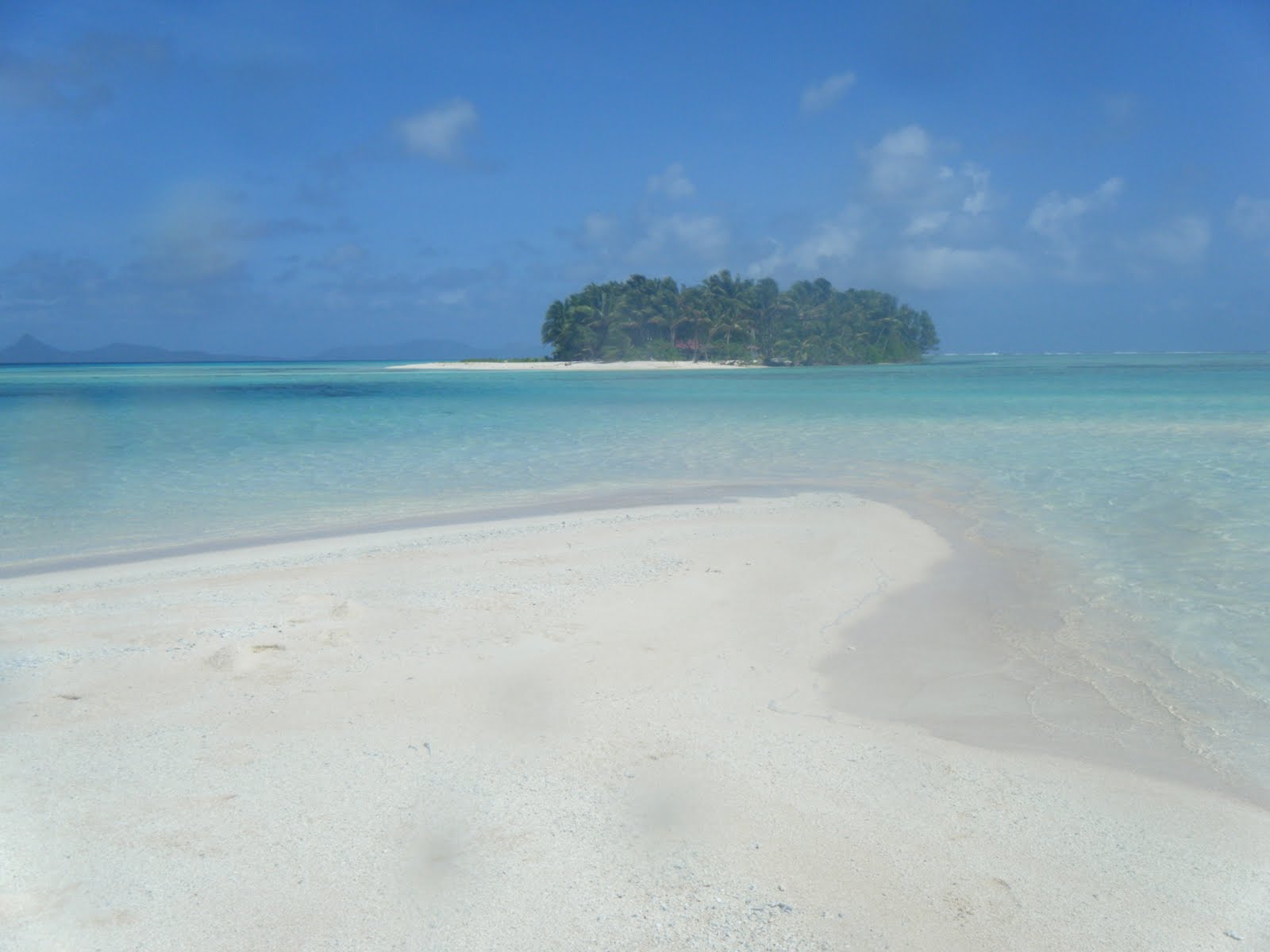
When I first started writing this entry, I was sitting at the Guam airport drinking my first (substandard) cup of merchandised coffee. I had left Xavier and Chuuk the day before, and it certainly was a scene. I spent the night and most of today at the Guma Pedro Jesuit house in Guam using fast internet, watching a big flat screen tv, driving a newly bought SUV and of course, reflecting back on my last few moments in the FSM.
My last couple of weeks were packed with mini adventures, and even though they usually entailed going to the same places, they were all vastly different experiences. A few weeks ago, during one of my many travels downtown, I visited the Chuuk Preservation Society – a tiny, 2 room “museum” located in Iras village on the second floor of a quiet, almost hidden “business building” in bad need of a paint job. I’ve been there before, but only to get free posters. This time, the man inside insisted on showing us around. He showed us some traditional and cultural articles and tools from Chuuk’s past. He had both Chuukese and Japanese weapons left over from WWII, and pictures of the bombing at Tonoas Island. Some of the stuff really caught my attention: axes made out of shell, wood, and stone; a tool for preparing and pounding breadfruit, miniature canoes, fish traps, navigation equipment, and of course love sticks. I asked him how many visitors they generally received, and he said not many. Some students from College of Micronesia go there for cultural research, but he said he had never had any visitors from Xavier or many of the elementary and high schools on Weno. As I already knew from teaching history this past year, he said that for the most part, Chuukese and Micronesian history and culture is neglected or all together ignored in schools. In his own words, he said that Micronesians are “all doing the Western ways.” He gave me some pamphlets for programs the Society has been trying to implement: women’s weaving techniques and traditional canoe building. He said that the elders want to and are trying to pass down their knowledge, but there is rarely anyone to receive it and so it might die. He discussed the sacred knowledge of navigation, and how it used to be that you could blindfold a man and leave him in a boat in the middle of the Pacific and by the waves, the fish, and the stars he could find his way home. Now the Micronesians rely on compasses, schedules, and handwritten maps to get them from place to place. He said there is not much effort to teach young Micronesians these things in schools, and that Westerners contribute to this lack of knowledge. And of course this leads to a general apathy and lack of interest from those who should be learning. He said there are a few textbooks and some other literature written on Micronesian history, but Western texts are favored. I mentioned to him that the history books I used made no mention of Micronesia anywhere, except for a brief “extra reading” excerpt on “unusual” kinds of money in which Yapese stone money was mentioned. I found the apathy he alluded to in a lot of Xavier students. At times, they displayed immense cultural pride and loved to brag about their cultural achievements and nuances, but at the same time they lacked very basic historical knowledge. I remember once asking the sophomore class to write about any Micronesian legend they knew about from any district. Only about 2 of them were able to come up with one. The majority of papers I received talked about Adam and Eve, or another Biblical myth. The priorities of most schools, at least on Weno, are really no longer cultural.
Right before I left Xavier, however, Daisy (a Micronesian staff member) told us a bunch of really interesting traditional legends and stories. It was the first time I had heard most of them, and it’s a great memory of a few of us sitting around the table on the porch listening to some cultural tales. One that I remember was about the forging of two tunnels through a rock mountain on one of the Chuukese islands. The story was that people would try to pass through the mountain to bring food to their chief, but a monster would eat them before they could reach the other side. The people commissioned the help of two turtles who dug two twin holes through the side of the mountain so the people could pass through without being eaten. The uneven, patchwork rock ceiling of the tunnels is evidently a relic of the turtles’ shells scraping along the walls as they dug. Daisy said now she and most Micronesians know that water caused the formations, but she still wanted to see it. I would have liked to see it too. There are so many more stories and legends I heard or read about this year and I don’t remember most of them. I wish I had spent more time talking to students about their backgrounds, even though I’m still not sure how many of them would be able to offer any deep cultural insight.
Before I left I also discovered the underworld of hitchhiking. I did this pretty frequently second semester (though never alone) since Xavier was never very helpful with rides. My last hitchhiked ride was with a man and a woman who took me literally from one end of the island to the other. I forget the man’s name, but he claimed to own a taxi “business” on Weno. He was originally from Guam and unlike most of the Micronesian inhabitants on Chuuk had no nearby family connections. I asked him why he left Guam in the first place since many Chuukese people strive to make enough money to move to and live in Guam. He launched into a strange story about how as an 11 year old he and some friends got into trouble at a restaurant in Guam and he ended up stabbing one of the workers in the side with a kitchen knife. He was bailed out of prison, but 10 years later was extradited to Chuuk where he has to wait for another 10 years before going home again. You can never really be sure how much of these stories to believe, but it IS an unfortunate fact that many convicts in Guam are sent to Chuuk… it’s hard to tell if it’s some kind of punishment or just an effort to take them off their hands but either way it’s ineffective since Chuuk has next to no penal system and the crime and violence rate is skyrocketing. This man seemed nice enough and it was hard envisioning him plunging a knife into someone, but a strange brand of violence has somehow become part of Chuukese culture. And I don’t really believe the theory that such violence is a relic of tribal warfare and aggression because it doesn’t appear on any of the other states, and even on many of the islands of Chuuk itself. The inability or unwillingness to rehabilitate criminals, or to outwardly deal with the social pressures and anxieties faced by Chuukese people I think is a much stronger contributor.
One of my final activities before departing was to visit the Japanese dock for the last time – one of the few safe (as in hygienic) swimming spots. Located in Sapuk not far from Xavier, the dock has a lot of very personal significance to me for many reasons. It’s one of the points of initiation into Xavier, and had been a spot for many a meaningful discussion. During my final visit, about 7 or 8 little naked Sapukian boys were jumping off the dock and swimming around. They were so cute, and acted ashamed when they saw me, but seemed to enjoy the fact that they could potentially make me uncomfortable. I eventually went swimming as well, and as I would make my way around the dock, the boys would often completely stop moving and just bob in the water watching me intently. This was my last notable experience with the “foreigner gaze.” Whites are generally chalked up to celebrity status, and that’s often how you feel in both a positive and negative way. Because you are white, you are scrutinized and criticized, sometimes more viciously and insidiously than you would expect. Your behaviors and actions are examined and analyzed, and judged, and privacy is a laughable concept. Sometimes you are admired, sometimes pitied, and sometimes disparaged. Of course, you are faced with the difficult, almost impossible challenge of striking a harmonious balance between your culture and theirs. At first, I would never go to town without a long skirt. But as the year progressed, I began to sense a difference between cultural sensitivity and my own principles. I started wearing athletic shorts downtown, and it caused a lot of stares. But wearing shorts isn’t culturally inappropriate as long as they cover down to your knees; it’s simply unconventional for women. I’m not a fan of convention, just as I’m not a fan of any form of censorship, but you do have to draw the line somewhere. So while I would never wear a mini skirt in downtown Weno, I began to feel less apologetic about my desire to wear pants. And I saw more and more younger Chuukese women wearing them as well. People, including myself, often have a difficult time with cultural relativity no matter how open minded we perceive ourselves to be. So while I believe the necessity of women to always cover themselves is inherently patriarchal, there has to be a medium in which my principles don’t have to outweigh cultural convention. Of course, in the meantime keeping in mind that these particular conventions are a relic of Christian occupation and questioning how “cultural” they actually are. It’s hard to strive for equality and empowerment while trying not to devalue or judge the systems of other cultures. It’s something I need to work on and would probably never fully grasp. One thing I did learn is that I would be hard pressed to ever only be a silent observer.
My last night at Xavier was also the birthday celebration of our principal. They wrote my name on the cake as well which was a nice touch for me. There was a lot of delicious local food, including an unending amount of coconuts, so it was a perfect note to end on. At night I watched the stars from the Xavier roof for the last time. I focused on the southern cross because it signified for me the next leg of my Pacific adventures in Australia. The clear, expansive sky and thousands of stars reminded me of the dense myriad of experiences I had in Chuuk. The year seems to not have happened – I feel now like it was some strange and blurred dream. I had a weird experience on Guam when I turned on my Verizon cell phone from home and looked at the last few text messages I received. They were from my mother back in August after I had said goodbye to her at the gate in Newark and was waiting, terrified, to enter this new life. Journal entries I had written expressed such fear and uncertainty, but also such confidence that if I could do this, I could do anything. And now I feel like I can. Airports no longer seem like intimidating, industrial jungles unable to be navigated, and actual jungles seem more peaceful and natural than unfamiliar. I lived comfortable in uncomfortable conditions and as the time progressed, they seemed no different than the environment back home. The only shock I feel is the reintroduction to what feels like overwhelming technology, but soon I know I will readapt to that as well.
I’m currently at Narita airport in Japan sitting in a small café dreading the daunting 12 hour flight stretched out before me. I think that the best feeling in the world will be getting on the plane in Dallas knowing it will be the last part of this long trip back to the Atlantic.
Subscribe to:
Posts (Atom)